To see is to believe.
That truism has never been truer than at this moment – this old fossil standing before you assigned to talk about the “evolution of media.”
A fair warning to you then, old school as I am, I may have to bore or even disappoint you, as my talk will be completely absent any power point visual aid. It may even come way below your expectations as this is no scholarly disquisition, not even an edifying lecture.
It is nothing more than a simple narrative of my journalistic journey of over 50 years, from the printing press to AI, and interesting things in between. Now, that is something indeed evolutionary. So, let’s go back to the future.
Before I even started in mainstream journalism, I already had some working exposure in the print medium as editor of our official school publication at the then-Assumption College in the City of San Fernando.
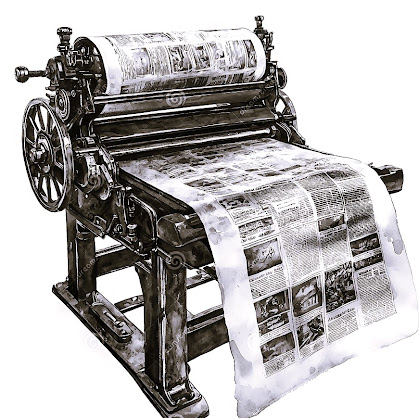
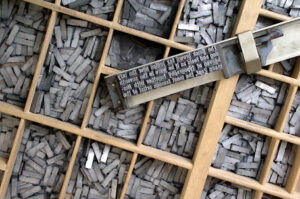
Part of our senior staff’s duties was some sort of apprenticeship at the printing press where we “put the paper to bed.” Literally, in the sense that the bed is a flat surface inside the mechanical printing press where the metal type is locked into place before rolling, a process called newspaper typesetting.
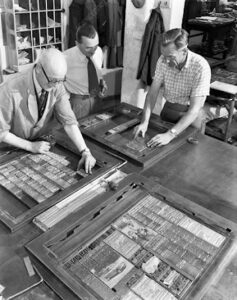
In the old printing technique of Letterpress, individual metal letters referred to as slugs are picked by hand to compose lines of sentences and placed into a composting stick then laid on a bed representing the page which is then inked and pressed directly into paper.
For photographs, the image is imprinted in magnesium plate, commonly known in printing parlance as “cliché” which is laid out on the bed with its corresponding story or text.
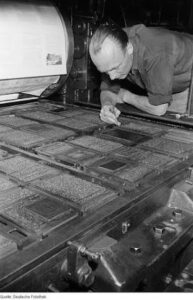
Before going into mass printing, each page had to be proofread, of course. And this is the hard part. With the sample page as guide, the proofreader will correct typo errors by pulling out the wrong letters with tweezers. (tina-tyani mo bawat maling letra mula sa kahon and replacing them with the correct slugs). You have no clue how tedious a task is this.
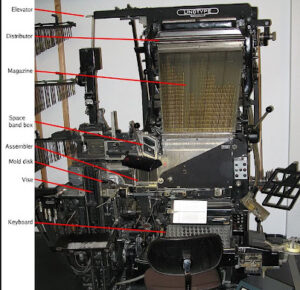
So, it was no mere evolution but a veritable revolution when the printing presses had their own Linotype machine where the operator typed entire lines of slugs from molten lead. (hindi na per letter ang laban, per line na). But still the bed stayed.
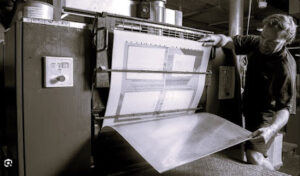
Highly revolutionary yet was Offset printing. Lead lines of text and photos are assembled on physical boards using hot wax before photographing the page to make a printing plate from where the image is transferred to rollers and then onto paper. The Heidelberger Druckmaschinen lorded all over printed media of this period.
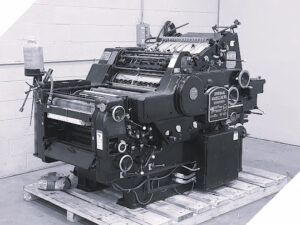
And then of course, into your era, Digital printing. Here, I cede knowledge to you.
So, that was how the news was printed. Now, how did it get to be written and transmitted? This was how it was well into the ‘90s.
Ballpen, paper. Basic tools of the reporter. Add a DLSR film camera for the photo-journalist. And not much later, a tape recorder – starting with the open reel and then the cartridge, and the cassette – for the broadcast journo.
At the editorial desks, the telephone and the typewriter.
We start with the usual field coverage of all aspects of life – for the provincial correspondent – from politics to business, from crime to commerce, from sports to beauty pageants, religious events to calamities, and the insurgency, as the provincial journalist is all-beat-in-one.
Once the news story is penned, we look for the nearest telephone, landline of course, the cellular phone came in much, much later.
No direct calls. You dial 0 for the operator, say you want a press collect call to Manila, identify yourself, name the receiving party and the phone number. The operator connects to the party on the other line, asks if he accepts collect call from the sending party, if yes, you get connected and start reading your story to him.
Trouble comes when the connection weakens or starts getting garbled. We start going into phonetic alphabet, a standardized spelling system used to communicate letters clearly over the phone or radio – Alpha, Bravo, Charlie, Delta, Echo… Pity the poor desk editor, stiff neck and all from cradling that phone on his neck while typing the story dictated over the line.
From the desk editor, the story is sent to the news editor for disposition – to the wastebasket, or the layout.
For the provincial photo journalist – after taking photos, he goes to a commercial photo studio to have his film developed into negatives. He would choose the best shot and mark it in the negative, write some caption about it, seal it in an envelope with the name and address of the publication plus the name and number of the photo editor or chief of photographers. He goes then to the bus terminal, pay freight cost, note the bus number and time of departure and phone the desk with this info, so a copyboy can retrieve the envelope once the bus arrives.
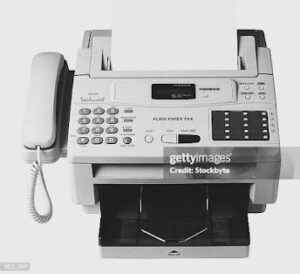
Much relief to the desk editors was the coming of the fax machine where the news story gets scanned, transmitted to the desk and printed over a telephone line. It made things easy too for the field reporter – type your story, fax it, then just wait for its publication or airing. A drawback though to this otherwise convenient development was what it spawned – the uniformity of news stories obtaining in some beats, read: duplicate copies, at worst plagiarized.
Press releases were routinely topped with headings that indicate the recipient’s name, the sender’s name, the date of transmission, and the news slug (what the story is about in 10 words at most). Only different in headings, the same press release was sent to different publications.
Even enterprise stories fell to this modus. All it took was a correction fluid and retyping of the heading, the addressee, and the sender. We had a word for this – Snopake journalism.

An essential part of the newsroom – the nucleus of publications and broadcasts – is the teletype machine that printed wire service news feeds from agencies like the AP, UPI, AFP, Reuters, Agencia EFE, Kyodo.
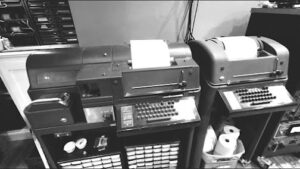
At every office across the country of the PNA, our own wire service agency, the teletype machine not only received news from its own network and foreign wires, but also transmitted news by combining a typewriter keyboard with electro-mechanical printing and a 5-bit binary electrical pulse system sent over wires. Amid the constant clatter of the machine, built-in bells would ring for urgent priorities like a flash report or breaking news that would interrupt ongoing transmissions.
The dot.com era rendered the teletype machine obsolete and opened the internet floodgates – email, online publications, social media, blogs and vlogs, Facebook, meta, tiktok, AI, and all that they entailed. Yours is this media era most manifest today. Ours has long passed.
Even memory now is hard-pressed recalling how it was with local media, even if only dating to the foundation of the Central Luzon Media Association in 1978. Those clearly remembered, in print:
In Pampanga: Pampanga Newsweek and The Voice, and immediately thereafter Pampanga Times, Luzon Herald Tribune, Pampanga Journal, Town Crier, onto Central Luzon Times and The Angeles Sun.
In Bulacan: The Reflector, the first broadsheet paper in CL, and Mabuhay.
In Tarlac: Tarlac Star
In Zambales: Olongapo News
In Nueva Ecija: Monday Mail and Dahong Palay
In Bataan: The Freeport Mail
For radio stations: DZYA and DZAP in Angeles City; DZTC and DZXT in Tarlac City; DWNE in Cabanatuan City; and DZYZ, DZOR, and DWGO in Olongapo City. Note that the broadcast media was city-centered.
The good old days, as I remember them.
An old curmudgeon, most definitely, I am. But a Luddite – one opposed to new technology – thoroughly I am not.
It has surprised a lot of young journalists to know that old school as I am, I still get to use AI. It is not how it is defined though as artificial intelligence. All me is AI: Ako Ito.
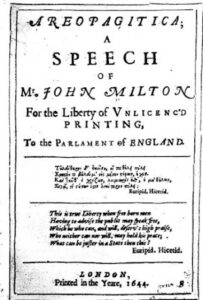
That is what has remained constant through the evolution in media that I have been most fortunate to live through, adhering to what I have embraced since high school as my very own article of faith as a journalist. First uttered in 1644 – at the time the monarchies possessed and exercised divine rights — but it speaks as true, and with even greater resonance, in this age of AI – this is Areopagitica, John Milton’s impassioned philosophical defence of the principle of the right to freedom of speech and expression, thus:
“Though all the winds of doctrine were let loose to play upon the earth, so Truth be in the field, we do injuriously, by licensing and prohibiting, to misdoubt her strength. Let her and Falsehood grapple; who ever knew Truth put to the worse, in a free and open encounter?
… For who knows not that Truth is strong next to the Almighty; she needs no policies, nor stratagems, nor licencings to make her victorious, those are the shifts and the defences that Error uses against her power: give her but room, and do not bind her when she sleeps, for then she speaks not true…”
Into whatever media may evolve, may we always speak Truth.