
Schneider Electric and PEZA are advancing energy resilience measures and a “whole-of-government-approach” across Philippine economic zones amid rising demand and the ongoing energy crisis.
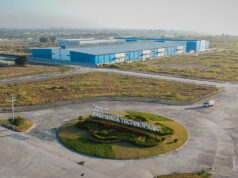
Clark, as a fast-growing industrial hub in the Luzon Economic Corridor, is emerging as a model for scaling energy efficiency and infrastructure solutions.
To sustain momentum in Clark and other economic zones, Schneider Electric and PEZA are aligning technology, policy, and infrastructure planning to support more energy-resilient ecozones that drive economic growth and generate employment across the country.
Manila, Philippines — High-efficiency motor incentives, solar rooftop deployment, and electric vehicle (EV) transition support are among the concrete steps Schneider Electric, a global technology leader, and the Philippine Economic Zone Authority (PEZA) are pushing to reduce fossil fuel dependence across Philippine economic zones, following a forum held last April 21 in Clark, Pampanga.
During the Innovation Talk: Powering the Future of Digital & Energy-Efficient Operations, Schneider Electric, alongside PEZA, Filinvest, and local operators, advanced sustainability measures such as solar rooftop deployment across public ecozones, incentives for high-efficiency motor adoption, EV and lower-emission logistics solutions, and business matching between locators and energy providers to help manage rising energy costs, strengthen operational resilience, and meet growing sustainability requirements.
Philippine special economic zones, which account for more than half of the country’s commodity exports, face energy volatility and insecurity amid rising industrial demand and an ongoing energy crisis.
“Energy technology, along with policy and infrastructure planning, becomes critical in helping industries adopt solutions that are practical, reliable, and capable of supporting long-term growth and resilience against any crises,” said Atty. Norman Roland Ocana III, Head of Government Affairs and Territory Sustainability Leader of Schneider Electric Philippines.
A whole-of-government approach
The forum also underscored the need for closer coordination across government, industry, and infrastructure stakeholders. Schneider Electric is supporting ecozones and industries through energy management, automation, and digital solutions including the Building Management System and Sustainability Reporting Platform that help improve visibility on energy use and strengthen operational resilience; PEZA is pursuing charter amendments to streamline compliance processes and better enhance alignment with other government agencies to further enhance ease of doing business within and outside the ecozones; and Filinvest is investing in ready-built industrial facilities with plug-and-play capability to allow locators to fast-track operations upon arrival.
“Our goal is to improve alignment across agencies so companies can operate with less friction,” said PEZA Deputy Director General for Policy and Planning Emmanuel D. Cortero. “We are creating an environment where businesses are more resilient to volatility and more efficient in operations.”
An epicenter of growth
Located at the heart of the Luzon Economic Corridor (LEC), Clark has emerged as one of the country’s most strategic industrial hubs, offering connectivity to major expressways, seaports, and airports. From 1,113 companies and 136,836 workers in mid-2023, this rose to 1,213 companies and over 145,000 workers by 2025. In 2024 alone, the zone attracted ₱77 billion in investments across semiconductors, renewable energy, electronics, and pharmaceuticals.

“We’re seeing the scale of prospective locators such as data centers and electronics manufacturers requiring significant levels of power and water supply,” said Francis V. Ceballos, Senior Vice President of Filinvest Land, Inc. “Industrial zones have to be prepared to take on these requirements.”
The country’s blueprint for the next decade
To sustain momentum, PEZA is advancing a nationwide strategy focused on digitalized investor processes, countryside expansion beyond Metro Manila, and the integration of renewable energy and microgrid systems as baseline ecozone infrastructure. Notably, the recently approved 2027–2030 Strategic Investment Priorities Plan has included in the industry prioritization the adoption of renewable energy and other energy-related activities to enhance energy security, promote sustainability, support the transition to a low-carbon economy, and encourage sustainable energy adoption among export enterprises nationwide.
Through the Innovation Talk and its partnerships across the ecozone ecosystem, Schneider Electric reaffirms its commitment to enabling the Philippines’ transition toward a more energy-resilient industrial economy.