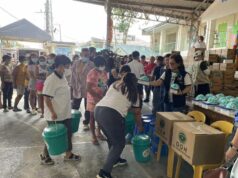

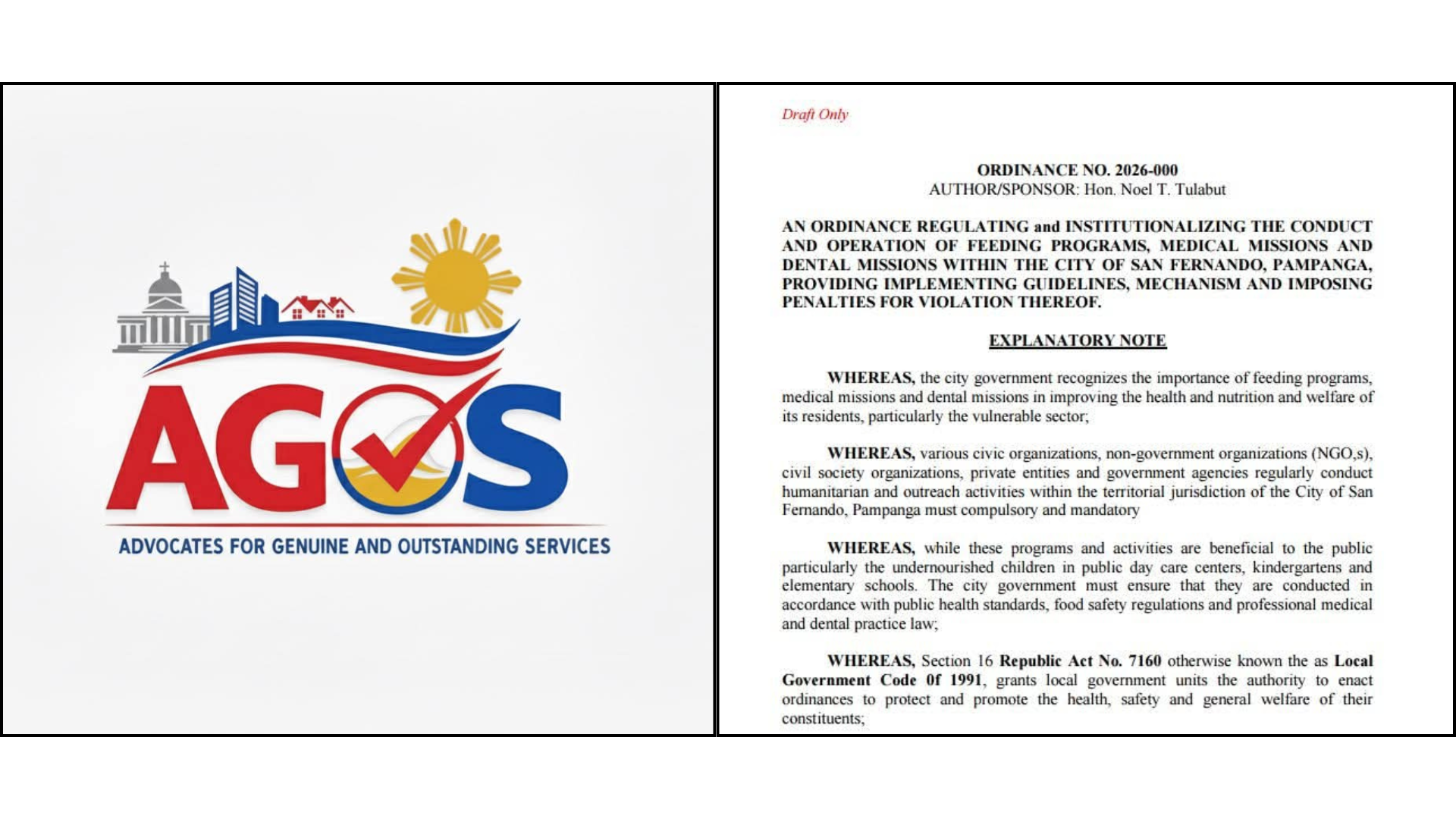
AGOS formally expresses its strong opposition to the proposed ordinance in its current framework.
While we support the goal of ensuring public safety, this measure introduces a restrictive, permit-heavy framework that threatens to stifle civic engagement. We believe that humanitarian aid should be facilitated by the government, not delayed by it.
In its current framework, the ordinance risks turning acts of community service into legal and administrative burdens.
I. THE PROBLEM: REGULATING COMPASSION AS BUREAUCRACY
The fundamental issue is that this ordinance applies a rigid “government-program” model to flexible, volunteer-driven initiatives.
-Mismatch of Speed: Humanitarian missions are often spontaneous or emergency-based.
-Administrative Friction: Requiring a multi-office approval process—including Mayor-endorsed letters and multiple clearances—effectively “outlaws” quick-response aid.
-Gatekeeping: By mandating a “No Permit, No Activity” rule, the city creates a system where help is dependent on administrative permission rather than community need.
II. THE CREATION OF BUREAUCRATIC BARRIERS
The requirement for numerous clearances (Barangay, School, Health Unit) and Mayor-endorsed letters transforms simple outreach project into a permit-heavy ordeal. This disproportionately affects small NGOs and grassroots groups that lack the administrative staff to navigate complex paperwork, potentially leading to fewer organizations being able to serve the poor.
THE RISK OF POLITICIZATION AND FAVORITISM
Centralizing the approval process through multiple political offices creates a structural risk of “gatekeeping.”
There is a significant concern that permits could be delayed or denied based on an organization’s political alignment or independence, making humanitarian aid vulnerable to subjective and selective enforcement.
REDUNDANCY OF NATIONAL LEGAL FRAMEWORKS
The ordinance duplicates existing laws, such as the Food Safety Act (RA 10611) and the Medical Act (RA 2382). By adding a local layer of regulation on top of national professional standards, the ordinance creates “legislative clutter”—increasing the burden on implementors without adding any real regulatory value or safety.
RESTRICTED ACCESS TO AID AND BENIFICIARY CONTROL
By forcing organizations to use government-generated “pre-evaluated lists,” the ordinance limits the ability of volunteers to respond to the “invisible poor”—those who may be in urgent need but are not officially registered.
Aid should be community-driven and inclusive, not restricted to official databases.
THE CHILLING EFFECT OF FINANCIAL PENALTIES
Imposing fines of up to ₱15,000 and the threat of blacklisting for procedural lapses creates a “chilling effect.”
Volunteers who wish to help the community may choose to stop their activities altogether to avoid the risk of personal financial or legal liability for minor clerical errors.
III. PROPOSED FRAMEWORK FOR REFORM
AGOS advocates for a shift from Control to Collaboration. We suggest the following amendments:
-Switch to a Notification System: Replace the permit requirement with a simple 48-hour notification. This allows the City Health Office to stay informed without becoming a bottleneck.
-Implement a Tiered Approach:
Exempt small-scale (e.g., under 50 people) or emergency-response feedings from heavy documentation.
-Remove Duplicative Requirements:
Accept PRC licenses and national safety standards as sufficient without requiring additional local permits.
-Prioritize Guidance Over Punishment:
Replace fines with technical assistance or “corrective guidance” for first-time procedural lapses.
Public welfare is best served through empowerment and partnership, not overregulation.
AGOS urges the Council to reconsider this ordinance and build a framework that protects the public while encouraging—not discouraging—the spirit of volunteerism in San Fernando.
Public institutions ought to facilitate the efforts of charitable organizations instead of imposing bureaucratic obstacles.
Government should provide the current that carries the compassionate forward, not the dam that holds them back.