CABANATUAN CITY (PIA) — The Nueva Ecija University of Science and Technology (NEUST) and its partners are exploring stronger collaboration to advance the country’s ube industry by bringing together expertise and resources in production, research, processing, value addition, and market development.
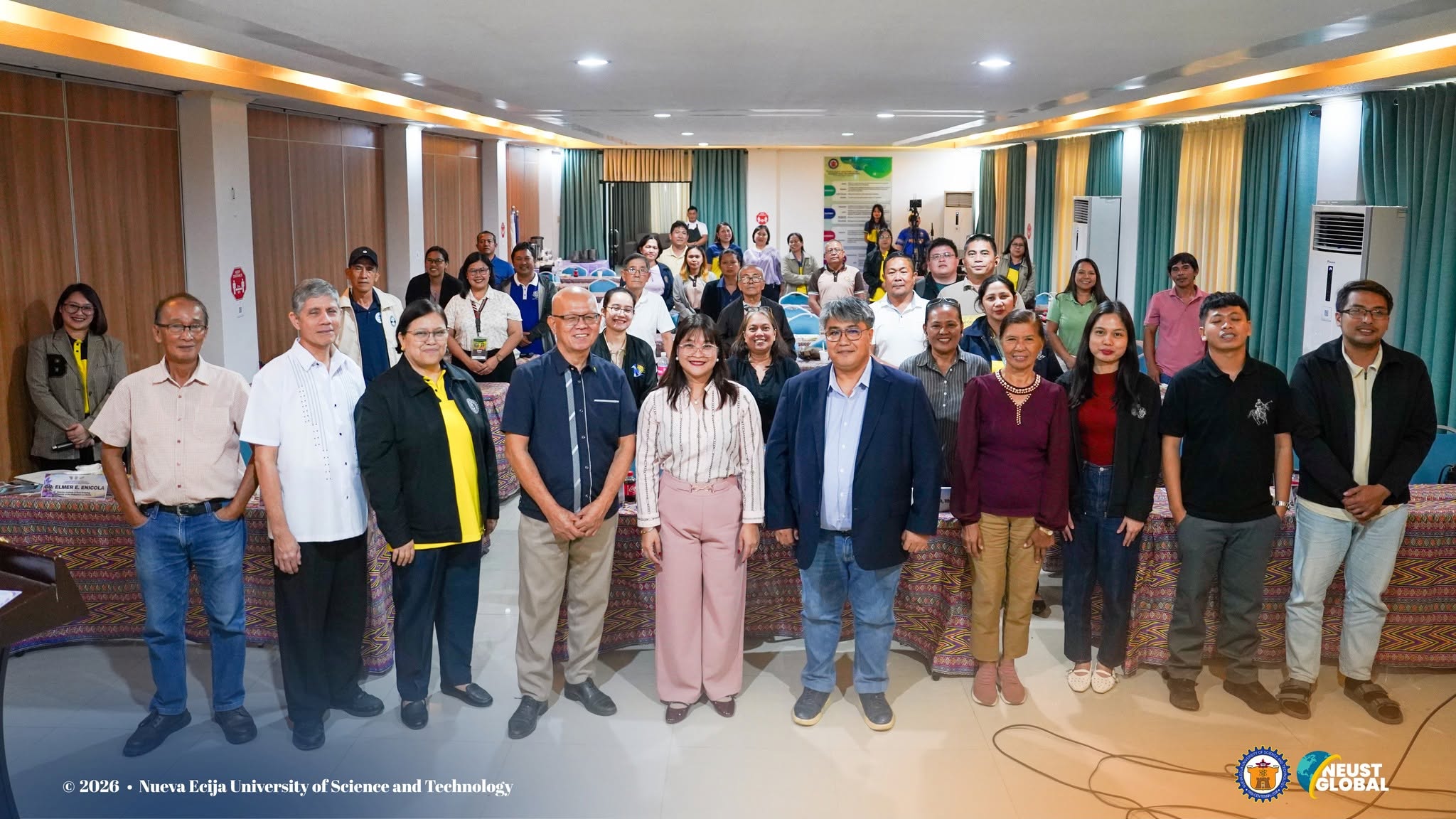
This was discussed during the Hybrid Technical Forum on Ube Production, Technology, and Value Chain Development at the Mini Convention Center of the NEUST Sumacab Campus in Cabanatuan City, Nueva Ecija.
The forum was organized by the NEUST Research Services Department in collaboration with the Philippine Council for Agriculture and Fisheries (PCAF) and Advocates for Research and Innovation in Agriculture, Incorporated (ARIA Inc.).
It gathered representatives from the Department of Agriculture, local government units (LGUs), and educational institutions, as well as farmers, cooperatives, researchers, and other stakeholders in the ube industry.
NEUST Vice President for Research, Extension, and Training Jean Guillasper underscored the need to strengthen the country’s ube industry during the forum.
“The future of the Philippine ube will not be determined by demand alone—it will be determined by what we do today to strengthen the entire system behind it,” Guillasper emphasized.
She called for developing ube into a stronger agricultural industry that can contribute to food security, rural livelihoods, innovation, and the country’s competitiveness in the global food economy.
The proposed Ube Network emerged as a key framework for coordinating efforts across the ube value chain.
Co-led by NEUST and ARIA Inc., the proposed network covers farmer education, research support, planting materials, production, value addition, and market development.
The framework outlines the roles of different stakeholders in developing the industry.
Higher education institutions and state universities and colleges (SUCs) can provide tissue culture expertise and technical support, while LGUs can assist with nursery development, acclimatization, and multiplication.
Farmers, meanwhile, have a role in the cultivation and production of quality ube.
SUCs with food processing facilities can contribute to product development and value addition.
The framework also encourages linkages with buyers and enterprises to improve market access and help producers respond to demand and price signals.
Former Bureau of Animal Industry Executive Director and Food and Agriculture Organization consultant Reildrin Morales pointed to ube’s potential to provide greater income opportunities for farmers and contribute to rural economic development.
“Ube is not simply a crop—it is an opportunity to bridge gaps, an opportunity to raise farmers’ income, to build a strong rural economy, and an opportunity to put another distinctly Filipino agricultural product in a global market,” Morales noted.
The forum featured discussions on ube production trends, export performance, agro-climatic suitability, planting material supply, tissue culture scale-up, production technology, pest management, post-harvest processing, value chain linkages, and market access.
It also allowed onsite and online participants to raise questions and concerns, exchange insights, and discuss possible areas for collaboration.
NEUST President Rhodora Jugo underscored the university’s role in the development of the ube industry.
“As a university, we do not claim that we can develop the ube industry by ourselves. What we can commit are the resources that define us as academic institutions—our people, our expertise, our research capabilities, our facilities, our students, our extension mechanisms, and our ability to build partnerships,” Jugo stated.
PCAF Executive Director Bernadette De Los Santos, in an audio-visual presentation, also emphasized the importance of continued stakeholder collaboration in developing the ube industry.
“We believe that meaningful development is achieved when the government, civil society, academe, industry, and other stakeholders work together,” De Los Santos said.
The effort aligns with the broader agricultural direction of the administration under President Ferdinand R. Marcos Jr. toward strengthening food security, improving farmer incomes, and developing more competitive agricultural value chains. (CLJD/MAECR, PIA Region 3-Nueva Ecija)