“Flood control.” It sounds a bit like “population control.” Both begin with something perceived as a problem and proceed immediately to a proposed solution.
For decades, China tried to address its population problem through a strict one-child policy. Today, it is confronted with a rapidly aging population and a shrinking workforce—a problem now shared by many countries in Europe and the Northern Hemisphere. A solution designed for one problem can eventually aggravate another when it fails to consider the larger picture.
Now let us go back to flood control.
What is the problem? Flooding, they say. And what is the solution? Flood control.
But did anyone first bother to ask: What is causing the flooding?
That is the danger of prescribing a solution before properly diagnosing the problem. Sometimes the supposed solution does not solve the problem at all. Worse, it aggravates it.
Flooding is not caused by just one thing. It is the result of many interconnected factors, and increasingly these are ecological factors.
Sea levels are rising, making our coastal communities more vulnerable to storm surges and making it more difficult for floodwaters to drain into the sea. A warming climate is intensifying the water cycle, allowing the atmosphere to carry more moisture and increasing the likelihood of extreme rainfall. Typhoons can bring enormous volumes of rain within shorter periods, while monsoon rains can become concentrated enough to overwhelm rivers and drainage systems designed for conditions that no longer exist.
Then there is what we ourselves have done to the land.
We have denuded watersheds and mountainsides that should absorb and slow down rainwater. We have paved over fields and open spaces where water used to seep naturally into the ground. We have built subdivisions and commercial developments on floodplains. We have narrowed, obstructed and polluted waterways. We have allowed creeks, esteros and drainage systems to become clogged with plastic and solid waste. We have treated rivers as garbage dumps and wetlands as vacant land waiting to be “developed.”
And then, when the water has nowhere else to go, we are surprised that our cities are flooded.
The Dutch understood this long ago. Much of the Netherlands—the “Low Countries”—lies at or below sea level. Water naturally seeks the lower ground. So they did not simply build dikes, canals, pumps and barriers wherever somebody happened to propose a project. They learned to understand how water moves. Their engineering became part of a much larger strategy of living with water, not simply fighting against it.
That is precisely what we seem to be missing.
Flood management cannot be a collection of disconnected concrete projects. It has to begin with watersheds, forests, rivers, wetlands, coastlines, drainage systems, land-use planning, solid-waste management and climate adaptation. It has to follow the natural movement of water through entire river basins—not political districts.
Water does not recognize congressional districts, city boundaries or electoral jurisdictions.
And perhaps this is precisely why the enormous corruption scandal now confronting our country has found such fertile ground in flood-control projects.
Billions of pesos have been poured into projects that too often seem disconnected from any coherent master plan. Projects are treated as political allocables. Politicians and favored contractors profit from structures that may be substandard, misplaced, poorly designed—or, in some cases, apparently nonexistent.
A wall built in the wrong place may merely push floodwater into another community. A dike constructed without regard for the whole river system may worsen flooding downstream. A drainage project is useless when the receiving river is already silted or clogged. No amount of concrete can compensate for a destroyed watershed, a disappearing wetland, a garbage-choked estero or a coastline increasingly threatened by rising seas.
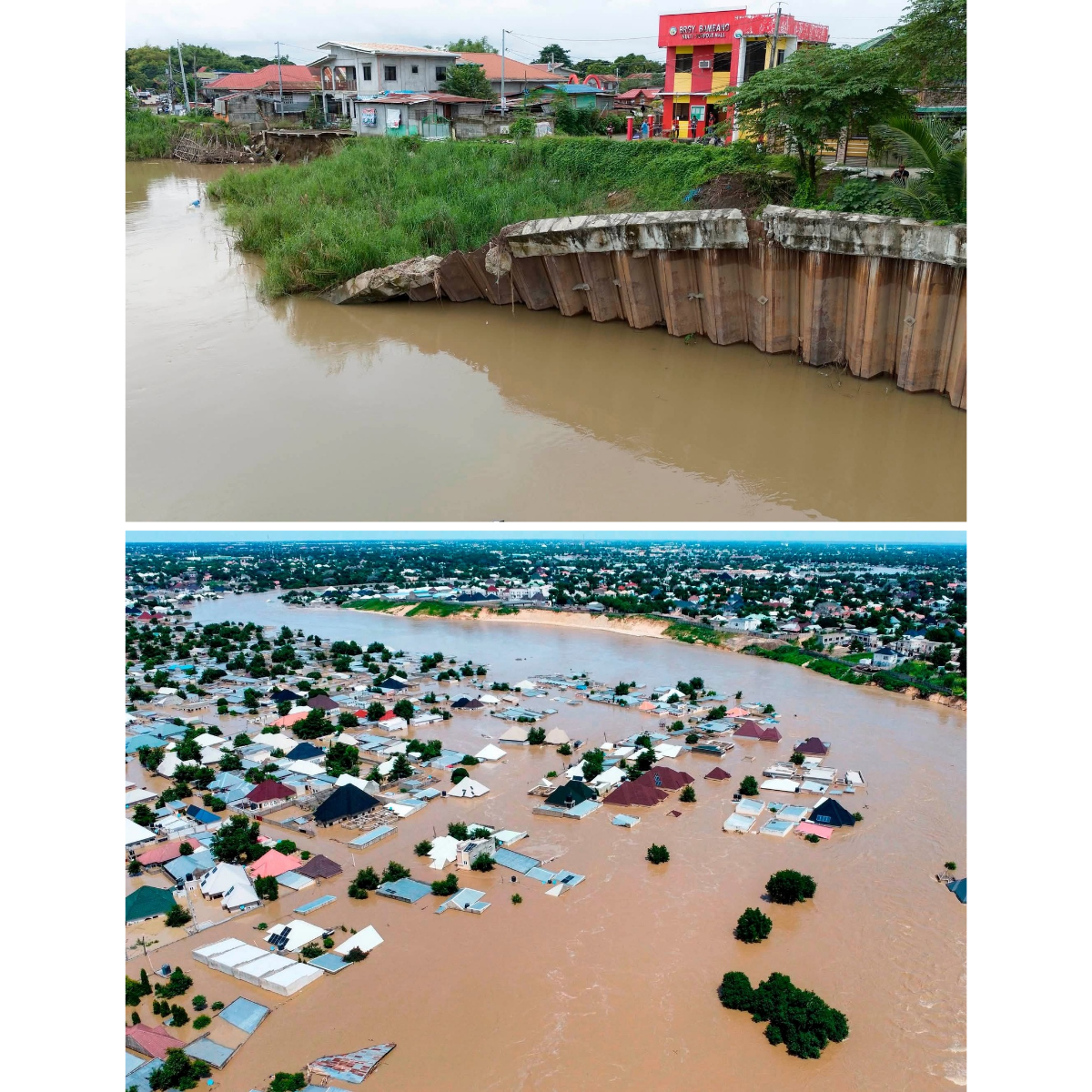
And so, we arrive at the absurd situation where some of our most heavily flooded communities are also places where billions have supposedly been spent on “flood control.”
Now imagine having to spend billions more—not to build new infrastructure, but to demolish or correct flood-control structures that should never have been built that way in the first place.
Who will answer for this?
What are our government agencies doing to identify those responsible and hold criminally liable those who enriched themselves while ordinary Filipinos lost homes, livelihoods, property—and sometimes lives?
But accountability cannot be left to government alone.
Citizens of this country, let us unite. We have nothing to lose but our misery.
Go to BISTO.PH and join the citizens’ ground validation of government infrastructure projects.
Register as a volunteer. Look up government projects in your locality—flood-control structures, farm-to-market roads, highways, bridges, school buildings, hospitals and other public infrastructure. Check the available information: Where is the project? How much did it cost? Who is the contractor? Is it ongoing, completed, or already undergoing repair?
Then go and look for it.
Take photographs. Document what you see. If possible, bring engineers, architects, environmental planners or other knowledgeable citizens who can help assess the work. Submit your findings to the Bisto Proyekto advocacy initiative.
Follow the Radyo Veritas 846 program Saba Diha, hosted by Max Ventura and Rafaela David, where citizens can discuss findings and help bring them into the public conversation.
And let us be fair. Citizen monitoring is not only about exposing what is wrong. When a project is well planned, properly constructed and genuinely serves the community, let us document that too. Let us recognize competent contractors and public officials who have used taxpayers’ money responsibly.
But where projects are ghost, substandard, grossly ill-planned, or deliberately overpriced, let the evidence lead to investigation, prosecution and accountability.
The billions being spent on infrastructure are our money. The roads, bridges, schools, hospitals and flood-control structures are our projects. And when they fail because of corruption or incompetence, it is our people who suffer.
We cannot solve an ecological problem merely by pouring more concrete. We have to restore watersheds, protect rivers and wetlands, manage our waste, plan our cities intelligently, prepare for rising seas and a changing climate—and make every infrastructure project part of a coherent, science-based master plan.
And perhaps the most urgent form of “flood control” we need right now is to stop the flood of public money flowing into the pockets of the corrupt.