The Philippines’ industrial map is beginning to shift, and Central Luzon is at the center of that change, as growth moves beyond its established southern base into new capacity corridors across Luzon.
Tarlac City – For decades, the provinces of Laguna, Cavite, and Batangas have anchored national production, supported by its deep industrial ecosystems, infrastructure networks, and sustained investor participation — but as foreign investment continues to concentrate in these corridors, land constraints are tightening and manufacturers are increasingly requiring larger, more flexible sites.
In response, industrial activity is extending into Central Luzon — strengthening national capacity while expanding the geographic base of production. This shift introduces greater redundancy and optionality for supply chain operations.
Within this shift, the region is becoming more integrated into a Luzon-wide industrial network supported by improving infrastructure connectivity and a deepening economic base. This is enabling manufacturers to distribute production, logistics, and support functions across multiple nodes within a single connected corridor, improving resilience and long-term operational flexibility.
For foreign manufacturers, this evolution supports supply chain diversification across both domestic and regional networks, reducing overconcentration in traditional industrial corridors and strengthening resilience against disruption. It opens up a broader set of scalable, multi-phase locations across the Philippines, allowing firms to distribute risk while maintaining operational efficiency.
Aboitiz Economic Estates, through developments such as TARI Estate, is positioned at the center of this transition by delivering integrated industrial platforms that align land, infrastructure, and long-term operational needs—supporting a more distributed and risk-balanced industrial footprint within an expanding regional value chain.
From Industrial Clusters to a Connected System
Industrial expansion is increasingly shaped by the need for scale, redundancy, and logistics flexibility. This is accelerating the development of a more distributed but connected Luzon industrial corridor, where production capacity is spread across multiple nodes while remaining operationally linked.
Central Luzon is part of this system, supported by NLEX, SCTEX, and TPLEX, which strengthen integration with Metro Manila, Northern Luzon, and key export gateways. Travel times between Tarlac and Metro Manila now allow for efficient coordination across supply chains, reinforcing the region’s role within a wider production network.
The region’s economic base continues to expand, supported by steady industrial growth, sustained investment inflows, and the parallel development of commercial and institutional ecosystems. This deepening structure supports both manufacturing activity and long-term workforce stability.
Within this context, Aboitiz Economic Estates develops integrated platforms where land, utilities, and estate operations function as a single system, reducing friction for locators while enabling scalable industrial growth.
TARI Estate at the Forefront of an Emerging Industrial Corridor
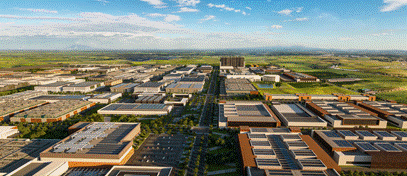
TARI Estate, a 384-hectare masterplanned industrial estate in Tarlac, is located within Central Luzon’s expanding manufacturing corridor and offers direct access to NLEX, SCTEX, and TPLEX, with connectivity to major ports of entry such as Subic Port, Port of Manila, and Clark International Airport.
The estate is designed for scalable industrial use, supporting light to medium manufacturers requiring large contiguous land and phased expansion capacity. Integrated utilities across power, water, and construction systems are delivered within the Aboitiz ecosystem to ensure operational continuity from setup through full-scale operations.
Within the broader Luzon industrial system, TARI Estate adds immense capacity to an evolving corridor, supporting the gradual extension of manufacturing activity beyond traditional southern hubs while maintaining established standards of infrastructure reliability.
“What we are seeing is not a shift away from established industrial centers, but the natural expansion of a system that has reached scale,” said Rafael Fernandez de Mesa, President & CEO of Aboitiz Economic Estates and Aboitiz Land. “As constraints emerge in mature corridors, growth is extending into new areas that can support the next phase of industrial development. Central Luzon is becoming a key part of that evolution.”
Built on Proven Industrial Execution
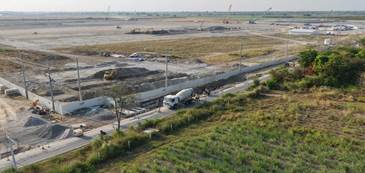
TARI Estate builds on more than three decades of industrial estate development under Aboitiz Economic Estates. Across its portfolio, the platform hosts over 260 locator companies, has enabled more than $2.8 billion in investments, and supports over 100,000 jobs. It operates within the Aboitiz integrated infrastructure ecosystem spanning power, water, construction, and estate management systems, with utilities and services aligned to phased industrial demand to support scalable operations over time.
This track record reflects a consistent operating model anchored on integrated infrastructure delivery, disciplined estate governance, and long-term alignment with locator expansion. As this model extends into Central Luzon, it enables a more integrated development approach where workforce readiness, infrastructure build-out, and operational scaling advance in parallel with the estate’s growth.
Aboitiz Economic Estates integrates human capital development across the estate lifecycle, aligning skills formation and local employment pathways with each stage of industrial development. As construction progresses and locator participation increases, local communities gain access to employment in construction and support services, while a steadily deepening talent base develops alongside future manufacturing and logistics needs.
For locators, this supports smoother onboarding and more predictable scaling, with workforce availability developing alongside infrastructure and demand. For the broader local economy in Tarlac, it enables participation across multiple stages of development while creating sustained pathways into manufacturing, logistics, and services as industrial activity expands.
Early Access Advantage in an Emerging Industrial Landscape
Central Luzon’s industrial base is growing, with clusters emerging across food processing, beverages, electronics, and light manufacturing. The structure of the corridor continues to evolve, influenced by early locational decisions that will shape its long-term industrial geography.
This is already reflected in the entry of manufacturers such as Ajinomoto and Coca-Cola within TARI Estate, economic and investment signals of shifting site selection priorities toward scale, connectivity, and expansion flexibility.
In this environment, early investments play a defining role in shaping the ecosystem as it develops.
Shaping the Next Phase of Philippine Manufacturing
Philippine manufacturing continues to attract sustained foreign direct investment across semiconductors, electronics, food and beverage, chemicals, automotive, and garments, reinforcing the country’s role in regional supply chains.
In response, industrial geography is expanding. Growth is extending into emerging areas capable of supporting scale, workforce demand, and increasing logistics complexity—reflecting a broader diversification of national production capacity.
Within this landscape, TARI Estate is leading this shift, adding structured capacity in Central Luzon while maintaining the operational standards established in mature industrial hubs.
Aboitiz Economic Estates continues to support this transition by linking proven ecosystems with new growth areas, ensuring continuity as the country’s industrial footprint evolves. What is taking shape is a more integrated national system, where Central Luzon is emerging as a second engine of growth alongside the south, helping shape and build the Philippines’ industrial future.