

SCIENCE CITY OF MUÑOZ (PIA) — Rice farmers can make better planting decisions and minimize potential production losses through climate-smart maps developed by the Philippine Rice Research Institute (PhilRice) to identify areas vulnerable to El Niño.
The Vulnerability Risk Assessment maps provide science-based information on drought exposure, crop sensitivity, and farmers’ adaptive capacity, helping farmers and local government units (LGUs) determine appropriate interventions based on local conditions.
Dr. Jesusa Beltran, scientist and head of PhilRice’s Rice Data Analytics Center, said the maps use color-coded levels to guide agricultural stakeholders in identifying suitable measures to address potential water shortages.
“Through these maps, farmers can better understand their vulnerability level and the actions they can take. For LGUs, the maps serve as a guide for agricultural planning and the delivery of timely support,” Beltran said.
Depending on the assessed risk, farmers may continue rice cultivation with appropriate water-management practices, adjust their planting schedules, use drought-tolerant varieties, or temporarily shift to crops requiring less water.
Ailon Oliver Capistrano, PhilRice agronomist, explained that farmers in less vulnerable areas marked green may proceed with rice planting while adopting water-saving technologies such as alternate wetting and drying and monitoring weather advisories.
Those in moderately vulnerable areas marked yellow are encouraged to coordinate with their respective LGUs on adjusted planting calendars, secure crop insurance, and consider early-maturing and drought-tolerant rice varieties such as NSIC Rc 480 and Rc 564.
Meanwhile, farmers in high-risk areas marked orange may temporarily diversify into less water-intensive crops such as corn, mungbean, watermelon, and pechay.
In severely vulnerable areas marked red, postponing rice planting and exploring alternative livelihood activities, including livestock raising, may be necessary.
Aside from risk assessment, PhilRice recommends water-conservation and climate-resilient farming practices, including direct seeding, solar-powered irrigation, rainwater harvesting, and integrated farming systems such as Palayamanan and Rice-Duck Farming.
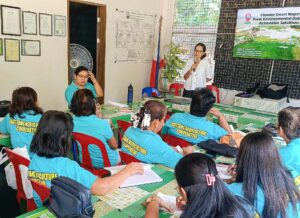
To translate these recommendations into community-level action, the Institute is implementing its #RiceReadySaElNiño campaign in two municipalities in Nueva Ecija and organizing one-day El Niño preparedness sessions for farmer clusters nationwide.
Through its Rice Business Innovations System (RiceBIS) program, PhilRice expects to reach more than 50,000 rice farmers through these learning activities, which build on its Lakbay Palay and other farmer education initiatives.
The sessions will help farmers assess local conditions, identify appropriate technologies, and coordinate with LGUs and RiceBIS Strategic Working Group members to access support for irrigation, quality seeds, farm machinery, and technical assistance.
The initiative supports the administration of President Ferdinand R. Marcos Jr. to strengthen agricultural resilience, protect farmers’ livelihoods, and ensure food security through science-based interventions and proactive measures against climate-related threats. (CLJD/CNG, PIA Region-3 Nueva Ecija)