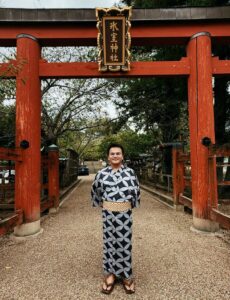
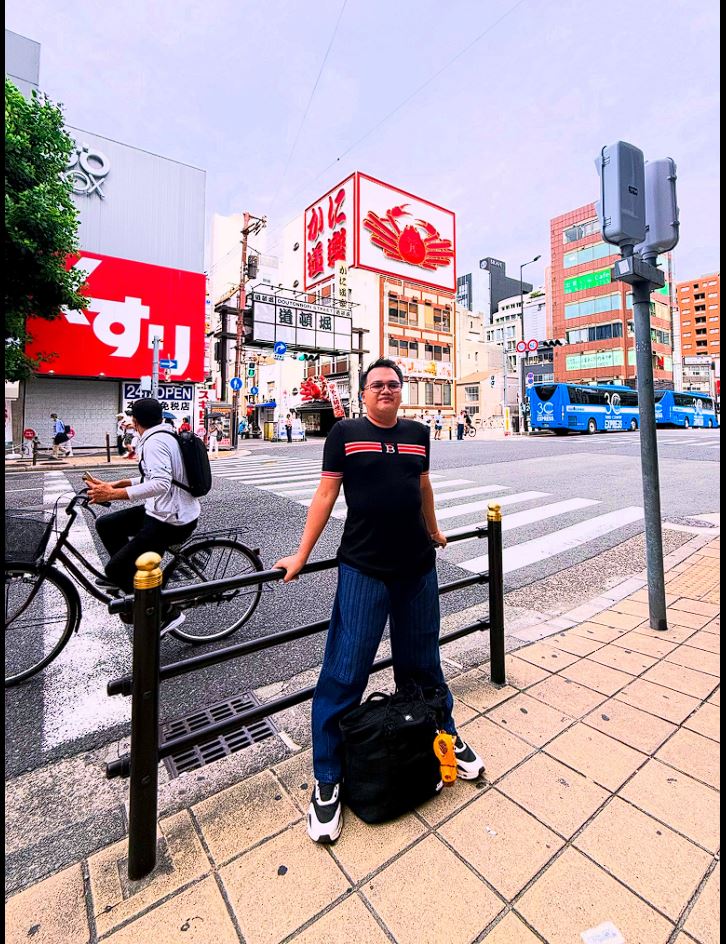
WE TOOK the wrong train in Japan, and somehow, it became one of the best things that happened to us.
It was already late in Okazaki. My feet were aching from hours of walking, the day’s itinerary had long been abandoned, and I was beginning to wonder where two Filipino travelers could possibly spend the night.
A few kind locals came to our rescue. They directed us to a 24-hour manga café, where we managed to rest for less than a thousand pesos. It was not the accommodation I had imagined when I planned my first trip to Japan.
It was the kind of travel story I wanted to bring home. I chose Japan for my birthday month, a long-held dream finally becoming a boarding pass, and traveled with my fellow September baby and cousin, Jamee. As first-time visitors, we were determined to see as much as we could, walking until our feet hurt and riding trains until station maps looked like puzzles. Eventually, we took the wrong train.
But somewhere between Japan’s perfectly timed trains, endless walks, busy stations and unexpected detours, I realized that the country was not meant to be experienced simply by rushing from one landmark to another. Sometimes, the best stories happen in between. That became the story of my first Japan.
In Osaka, I found a city that seemed to communicate through neon and food.
In Nara, I watched deer wander through a landscape where nature, history and tourism have learned to coexist.
In Nagoya, I traded the role of tourist for that of a media practitioner, covering Filipino athletes competing on the Asian stage.
In Kyoto, I walked through streets where centuries-old temples and traditional architecture continue to exist alongside contemporary life.
And everywhere, there were small discoveries that never appeared on the itinerary.
A convenience-store meal that deserved more attention than expected. A neighborhood diner. A gacha machine that refused to let me walk away. A Pokémon display that briefly transformed me from an adult traveler into an excited child. A stranger who stopped to help us when we were lost. A sunset that lasted only minutes.
These were the moments that gave the journey its texture.

OSAKA: FOLLOWING THE NEON
My introduction to Osaka was impossible to miss. Dotonbori was already alive when we arrived — its towering signs glowing above a constant stream of pedestrians, restaurants calling for attention and the river quietly cutting through the center of the spectacle.
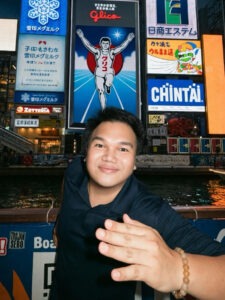
Then I saw the Glico Man. The famous running figure has become one of Osaka’s most recognizable symbols, and for a Filipino visitor, the image carries an intriguing connection. It is said to have been inspired in part by Filipino sprinter Fortunato Catalon.
I knew immediately that I needed the photograph. But Osaka is not a city one simply photographs. It is a city one tastes. Much like Pampanga, where food is inseparable from identity and hospitality, Osaka wears its culinary reputation proudly.

We ate Kobe beef, Ichiran ramen, gyukatsu, takoyaki and matcha treats. At Kuromon Market, we sampled gyoza featured in the Michelin Guide, then continued wandering through stalls, izakayas and local diners.
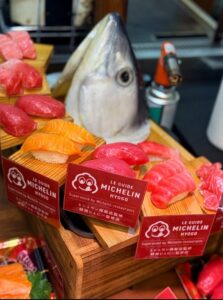
I found myself appreciating not only what we ate, but how food seemed integrated into everyday life. Even convenience stores offered surprisingly fresh and appetizing meals.

Then came Shinsaibashi-Suji Shopping Street, where the challenge was no longer deciding where to go but deciding when to stop.
THE KID IN ME CAME ALONG FOR THE TRIP
Japan also reminded me that travel can temporarily suspend adulthood. I became fascinated with gacha machines. I tried claw machines. I stopped for anime. And, of course, Pokémon.
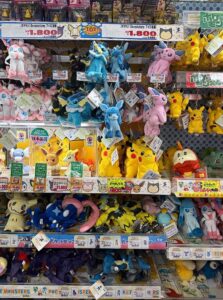
There was something wonderfully disarming about being surrounded by characters and collectibles that had occupied some corner of my childhood.
For a few moments, the itinerary did not matter. Neither did the next train. I just wanted to see what was inside the machine.
NARA: SHARING THE CITY WITH DEER
In Nara, the energy changed. The city felt slower, greener and older. And the deer were everywhere.
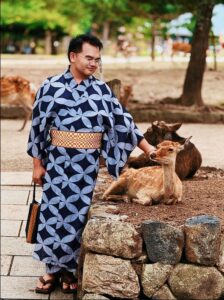
They moved through parks and pathways with an ease that suggested they knew they belonged there. Visitors offered shika senbei, and the deer approached with varying degrees of patience. Watching them, I found myself thinking about coexistence.
In Nara, wildlife is not separated from the cultural landscape. People, animals, temples and tourism occupy the same spaces, creating an experience unlike anything I had encountered before.

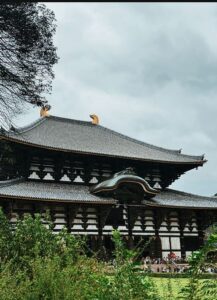
With the Cervantes family and friends, we visited Todaiji Temple, where the enormous wooden hall houses the colossal Great Buddha.
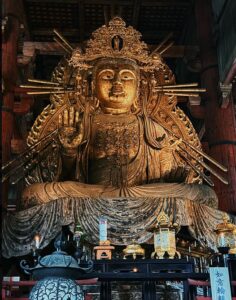
Inside, golden bodhisattvas stand beside the Buddha, while one of the massive golden shibi ornaments once used on the temple roof is preserved for viewing. The scale was impressive. But what stayed with me was the continuity…the sense that history here is not merely something to study, but something still woven into daily life.
NAGOYA: WHEN TRAVEL BECAME WORK
Nagoya gave me another reason to be in Japan. From the sidelines, I had the privilege of covering and witnessing #AlasPilipinas Women’s Volleyball at the 2026 Asian Games.

For me, the experience carried a different weight. I was no longer simply traveling with a camera. I was documenting Filipino athletes representing the country thousands of kilometers from home.
The Philippine squad finished ninth in the tournament, closing its campaign with a victory over Hong Kong. But from my position on the sidelines, the final ranking was only one part of the story.
I saw the discipline behind every movement, the concentration between points and the physical and emotional demands of competing at that level. Most of all, I saw what it meant to carry the Philippine flag into an international arena.
Then, when the work was done, our own adventure began.
We took the wrong train.
It was late. We returned to Okazaki Station and started looking for somewhere to stay. Fortunately, locals pointed us toward a 24-hour manga café.
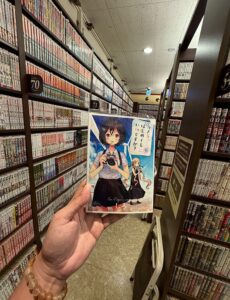
Less than a thousand pesos later, we had somewhere to rest. I have stayed in better places. But I doubt many of them will ever make as good a story.
KYOTO: WHERE THE PAST REMAINS PRESENT
Kyoto felt different from the moment we arrived.
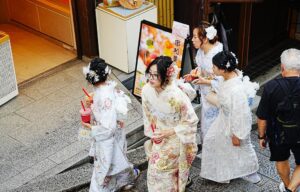
At Yasaka Pagoda, formally Hokanji Temple, the city’s history seemed to rise directly from the streets. The present five-story structure dates to 1440 and stands approximately 46 meters high. Tradition traces the temple’s origins to Prince Shotoku, while its ancient foundation is believed to hold a reliquary associated with Buddha’s remains.
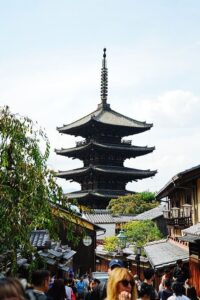
Yet Kyoto’s story is not frozen in the past.
Nearby, the Starbucks at Ninenzaka occupies a repurposed traditional Japanese home. The contrast was striking. A global coffee chain inside a 100-year-old traditional Japanese townhouse, surrounded by historic streets and architecture.
In Kyoto, the old and the new did not seem to compete. They simply found a way to live beside each other.

We also witnessed a mochi-pounding experience, taking part in the rhythmic process of turning steamed rice into the soft, chewy treat.
And once again, I was reminded that some cultural experiences are best understood by participating in them.
THE STORIES BETWEEN THE STOPS
Looking back, I remember the landmarks, but I remember the spaces between them just as vividly: the endless walks, the train platforms, the station maps, the convenience stores, the tiny restaurants, the unexpected kindness of strangers, the laughter after realizing we had boarded the wrong train, and the quiet moments when there was nowhere we needed to be. Perhaps that is what first journeys are supposed to do: give us enough of a place to understand that we have barely begun to know it.
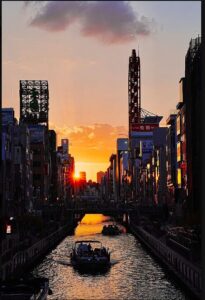
THE LAST LIGHT OVER DOTONBORI
My most enduring image of Osaka did not come from its brightest sign or most famous landmark. It came quietly beside the Dotonbori River, as the city buzzed around me. The sky darkened, the neon grew brighter, and the last light of sunset slipped across the water, turning it gold. I stood there and watched, knowing the moment would last only seconds. There was no grand attraction, just the river, the city and the final light of the day. Yet somehow, it became the photograph I did not know I had been waiting for.
My first journey to Japan gave me more than the places I had planned to see. It gave me food worth remembering, temples worth pausing for, athletes worth documenting, strangers worth thanking and mistakes worth laughing about. It allowed me to be a journalist, a photographer and a traveler, but also, for a while, simply a child fascinated by Pokémon and gacha machines. Most of all, it taught me to leave room for the unexpected, because sometimes the wrong train, an unplanned stop or a fleeting sunset becomes the story we remember most.
I came to Japan during my birthday month with a dream I had carried for years. I left with a camera full of stories, a heart full of gratitude and the realization that I had only begun to know the country. There is still so much of Japan waiting beyond the next station, the next street and the next horizon.
And now, I have every reason to return.