
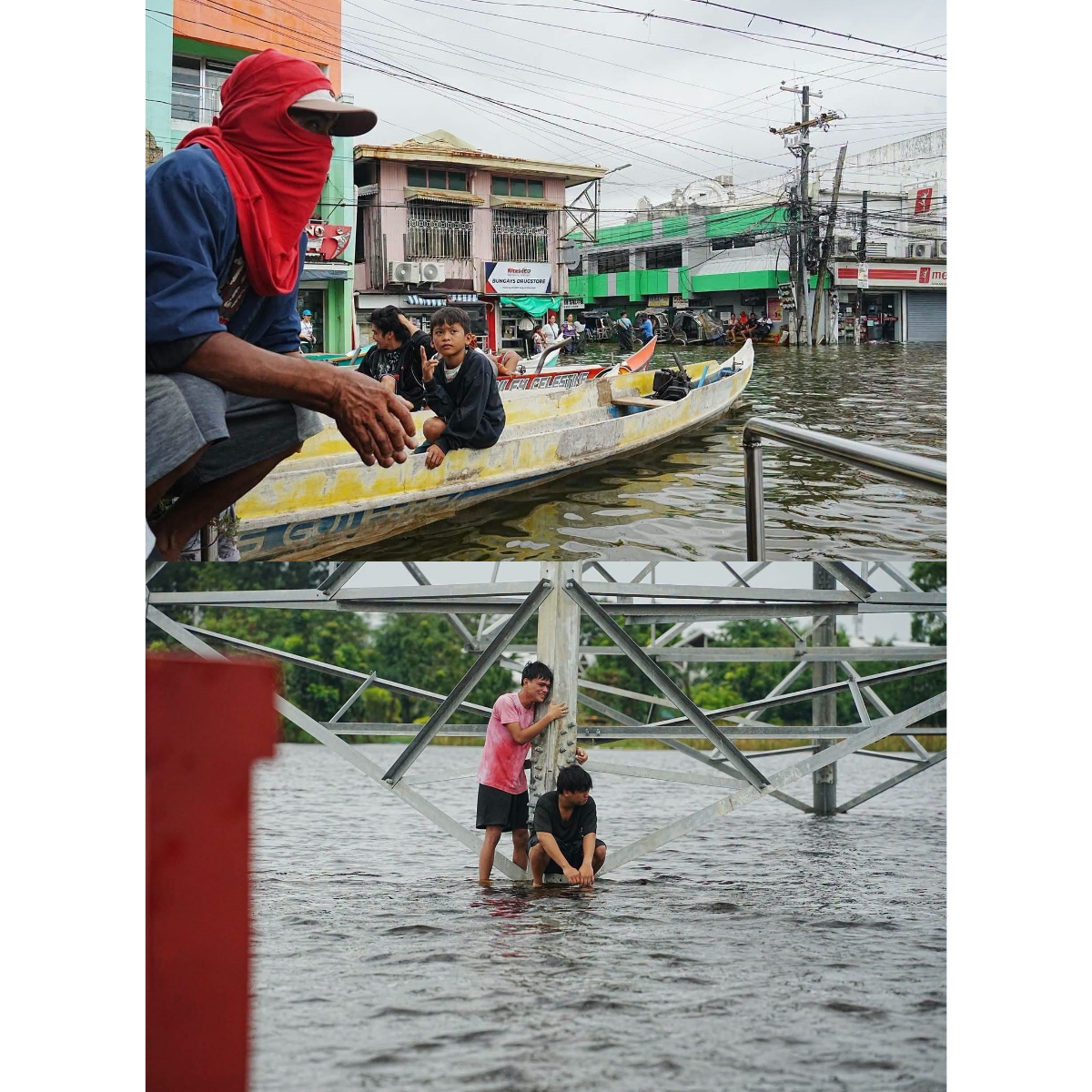
THE RECURRING flooding experienced by many communities in Pampanga deserves a long-term, science-based and coordinated response.
We recognize and appreciate the continuing efforts of the National Government, the Department of Public Works and Highways (DPWH), the Provincial Government of Pampanga, our local government units, and other concerned agencies in implementing flood-control projects, dredging and desilting waterways, improving drainage systems, and protecting vulnerable communities. At the same time, the persistence and increasing severity of flooding remind us that this challenge cannot be addressed through individual or localized projects alone.
Pampanga is part of the much larger Pampanga River Basin. Water flowing into our province comes from an extensive watershed covering several provinces in Central Luzon. What happens upstream ultimately affects communities downstream, particularly the low-lying areas of Pampanga and the Pampanga River Delta.
There are already important government studies and plans addressing the Pampanga River Basin, including the Climate-Responsive Integrated Master Plan for the Pampanga River Basin, earlier studies undertaken with JICA, and more recent DPWH initiatives involving floodways, retarding basins, upstream water-storage facilities, and improvements to the Pampanga River and its delta.
Rather than starting again from zero, perhaps the appropriate next step is to review, update, consolidate and accelerate the implementation of these existing plans into one integrated and climate-responsive Pampanga River Basin Flood Management Program.
Such a program should examine the entire system from the mountains and watersheds upstream, to rivers and tributaries, dams and detention basins, natural floodplains and wetlands, drainage and pumping systems, the Pampanga River Delta, and ultimately the discharge of water into Pampanga Bay.
It should also determine the appropriate role of dredging and desilting within the larger strategy. These activities may remain necessary in particular locations, but they should form part of a comprehensive engineering and environmental solution rather than become the principal response to recurring flooding.
We respectfully suggest that the concerned national agencies, together with the Provincial Government and affected LGUs, consider presenting to the public the current status of the Pampanga River Basin master plans and major flood-management projects: what has already been completed, what remains to be implemented, what needs updating, how much investment will be required, and what realistic timetable can be established.
More importantly, implementation should transcend political and administrative terms. Flooding is a long-term challenge, and its solution may require many years of sustained investment. A comprehensive program should therefore continue regardless of changes in national or local leadership.
This is not intended as criticism of any agency or administration. It is an appeal for greater coordination, continuity and a common long-term direction.
Every year that communities remain flooded for weeks or months means disrupted businesses, damaged farms and homes, interrupted education, health risks, lost productivity and enormous economic costs. Resources repeatedly spent on emergency response and temporary interventions might achieve greater long-term value when complemented by investments that address the underlying causes of flooding.
Pampanga has an opportunity to become a model of modern, climate-resilient flood management not by fighting water project by project, but by understanding and managing the entire river basin as one interconnected system.
The question should no longer be simply: “What flood-control project do we build next?”
The more important question is: “What must we do, as one region and one river basin, so that the next generation of Kapampangans will no longer have to live with severe and prolonged flooding as an unavoidable part of life?”
We respectfully encourage our national government agencies, provincial and local governments, the private sector, academe, technical experts and affected communities to work together toward that long-term solution. Flooding does not recognize political boundaries. Neither should our solution.