
QUEZON CITY, Philippines – Animal welfare in the Philippines is entering a new phase as lawmakers, government officials, lawyers, veterinarians, law enforcement officers, local and national government representatives, regulatory agencies, advocates, and young leaders gathered for the country’s first Philippine Animal Law Conference, calling for stronger laws, effective enforcement, and greater accountability for the protection of animals.
Organized by the Animal Kingdom Foundation (AKF), the September 4 conference brought together stakeholders from across sectors to examine whether the country’s existing legal framework is keeping pace with the growing challenges in animal welfare and what must be done to make legal protection more effective.
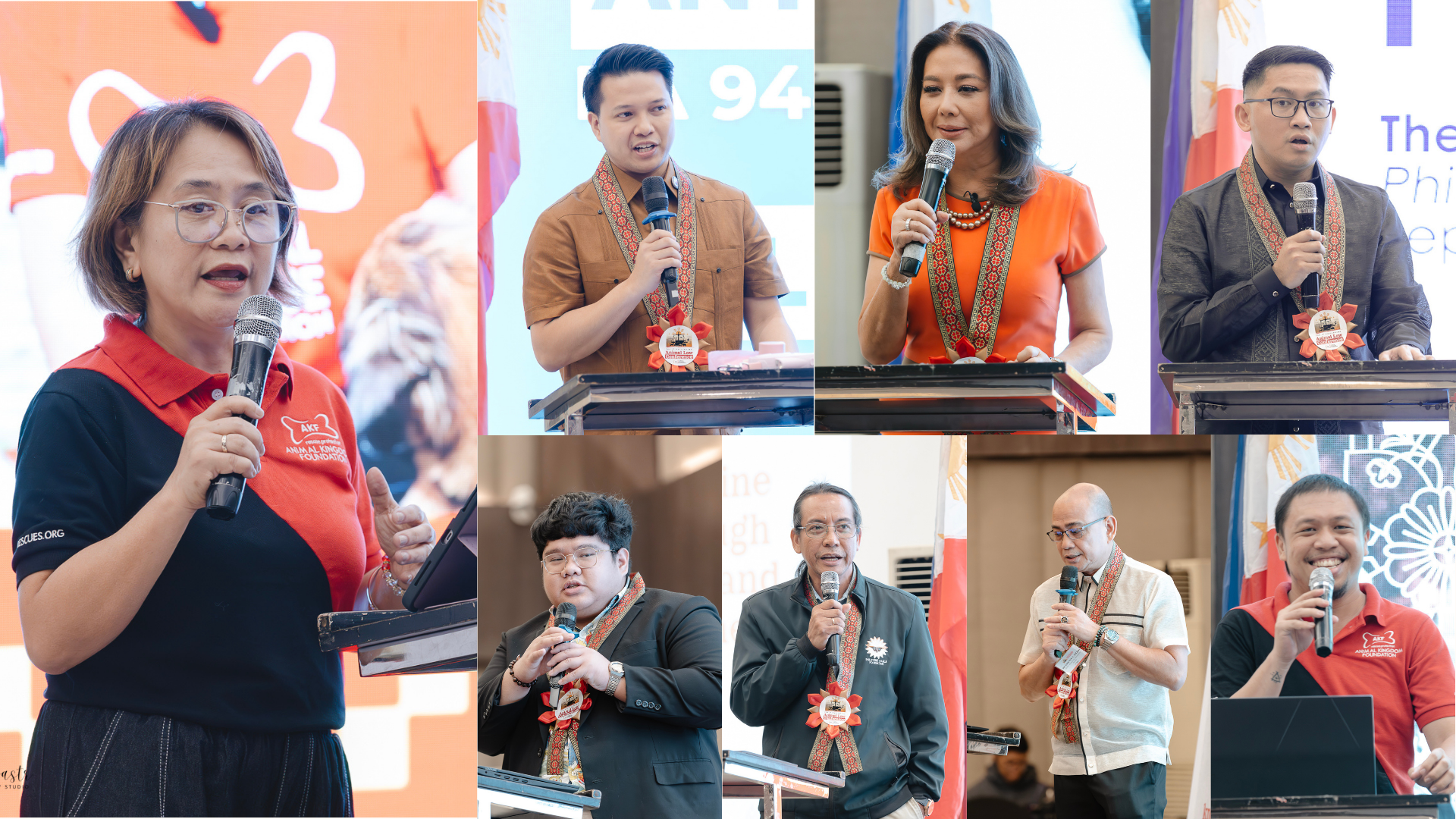
For AKF President and Program Director Atty. Heidi Marquez-Caguioa, the conference reflects an important shift in the national conversation. “Animal welfare is no longer simply a matter of compassion. It is a matter of law, governance, accountability, and public responsibility,” Caguioa said.
The conference featured perspectives from the legislative, media, government, youth, legal, veterinary, and animal welfare sectors, underscoring that protecting animals requires more than advocates’ efforts alone.
Rep. Brian Poe highlighted the critical role of legislation in strengthening animal protection and addressing gaps that continue to hamper effective enforcement. His participation underscored the need for lawmakers to ensure animal welfare laws respond to emerging forms of cruelty and give authorities the tools needed to enforce them. He emphasizes that “May batas na tayo, ang hamon, ipatupad ito at tiyakin may manananagot. Let’s build a system that actually responds even when no camera is present and provides care long after public attention has moved on.”
Veteran journalist and broadcaster Korina Sanchez brought the issue of animal welfare into the broader public conversation, emphasizing the importance of awareness and the role of media and public engagement in changing how society views and treats animals. According to her, “It is time we extended (that) Bayanihan to our animals. Media has given us a megaphone. We’re here! Make use of us.”
The National Youth Commission, meanwhile, brought the youth perspective to the discussion, recognizing young Filipinos not simply as future advocates but as active stakeholders who can help shape a culture of responsibility and respect for animals. Atty Carl Quitoriano, Executive Director, says that “building a better society begins with how we treat those who cannot help, defend and speak for themselves. And that is our animals.”
The conference also highlighted the need to look beyond traditional discussions of companion-animal welfare. Panels tackled issues involving farm animals and food production, aquatic animals, wildlife, animals in captivity, conservation efforts, disaster response, indigenous practices, and animal welfare law enforcement.
This broader approach reflects the reality that animal protection intersects with numerous areas of public policy, from agriculture and food systems to environmental protection, disaster management, public safety, and local governance.
A recurring concern throughout the conference was the gap between the existence of laws and their actual implementation.
The Philippines has an established legal framework for animal protection, including the Animal Welfare Act, but enforcement remains a continuing challenge. Cases involving cruelty, illegal animal activities, and neglect often require coordination among law enforcement agencies, veterinarians, prosecutors, local governments, and animal welfare organizations.
For Caguioa, strengthening animal protection therefore requires both legal reform and institutional accountability.
“Compassion must be translated into law, law must be translated into action, and action must lead to accountability,” she said.
The conference also recognized the critical role of local governments, which are often on the front lines of animal welfare concerns, from stray animal management and cruelty complaints to disaster response and emergency rescue.
Rather than treating animal welfare as a stand-alone advocacy concern, the conference sought to establish animal law as an emerging area of legal and public policy discourse in the Philippines.
For AKF, the goal is to continue the conversation beyond the conference and build stronger collaboration among those responsible for making, interpreting, enforcing, and improving laws that protect animals.
At the heart of the gathering was a fundamental question: What does it mean for the law to protect animals if that protection cannot be effectively enforced?
The Philippine Animal Law Conference seeks to help answer that question by bringing together the sectors that can turn legal protection into meaningful action.
As Caguioa put it, “The question is not simply what the law says. We must also ask what the law can do and what we, collectively, are prepared to do to make it work for animals.”