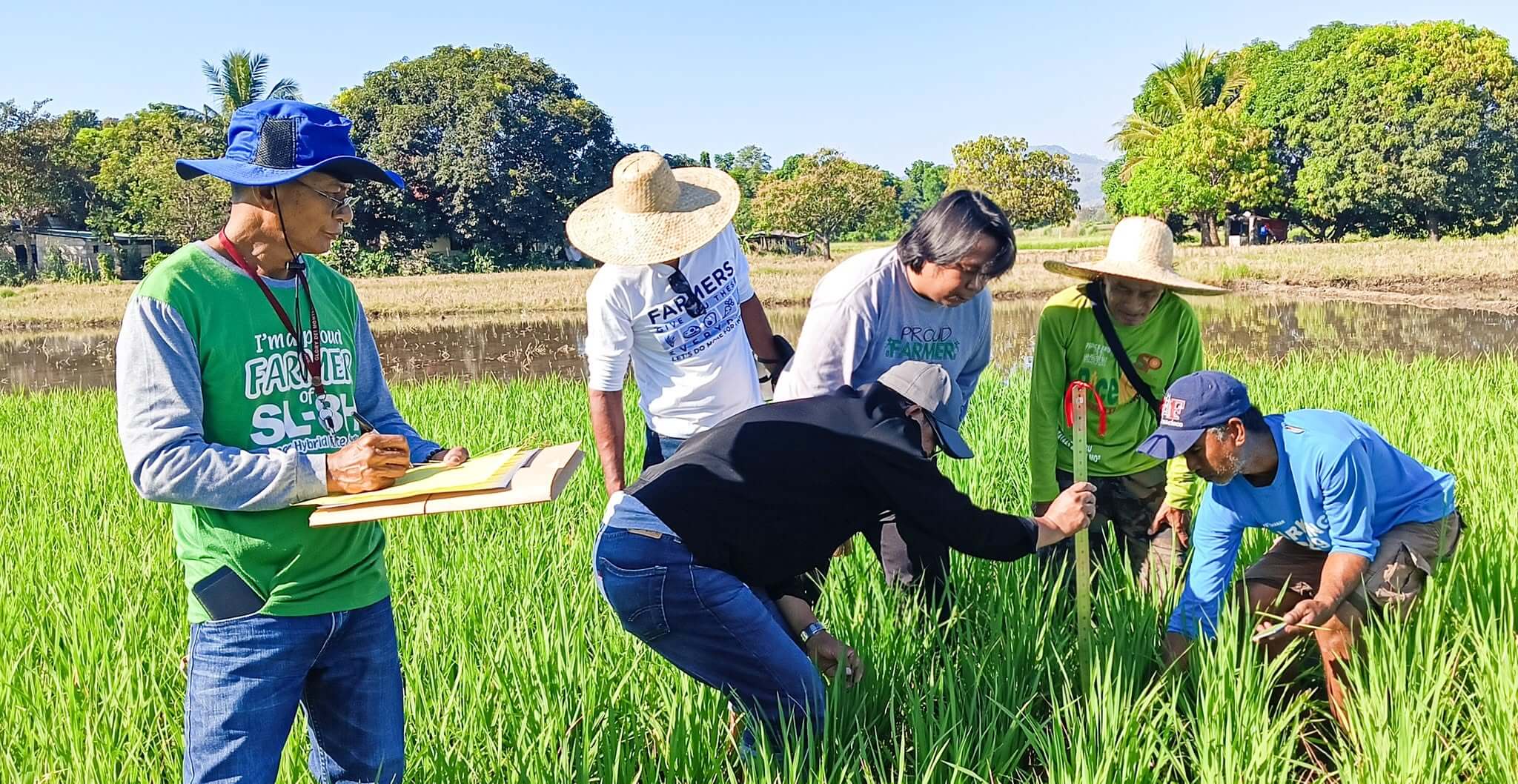
SCIENCE CITY OF MUÑOZ (PIA) — The Philippine Rice Research Institute (PhilRice) is urging rice farmers to strengthen their pest management practices, specifically by adopting Integrated Pest Management (IPM) to combat the widespread infestation of golden apple snails (kuhol).
Magiting Garcia, Senior Science Research Specialist at PhilRice, warned that golden apple snails pose a serious threat to rice production due to their rapid reproduction.
“The types of rice fields severely affected by apple snails are those with irrigation systems, drainage canals, or any area with standing water where these pests can thrive,” Garcia said.
He explained that these pests target young seedlings in irrigated fields.
They are also highly resilient, capable of surviving the dry season by burying themselves in moist soil, only to resurface and become active once water is reintroduced.
According to Garcia, a single golden apple snail can lay between 1,000 to 1,200 eggs per month.
Without proper intervention, their population can multiply rapidly and devastate entire crops.
To lessen the infestations, PhilRice recommends and encourages proper land preparations, including leveling rice fields, constructing drainage canals, and periodically draining fields to interrupt the pest’s life cycle.
Farmers are also encouraged to manually collect snails and eggs, install screens at irrigation inlets, and use biological control methods, such as allowing ducks to forage in fields before planting.
Garcia also emphasized that chemical molluscicides should only be used as a last resort when cultural, biological, and mechanical control methods are no longer sufficient to prevent severe crop damage.
Through the adoption of integrated pest management practices, PhilRice aims to help farmers minimize losses, protect rice seedlings, and improve productivity while promoting sustainable rice farming.
This initiative also supports President Ferdinand R. Marcos Jr.’s agenda to ensure food security by fostering science-based farming practices that enhance rice productivity and encourage sustainable agricultural development. (CLJD/CNG, PIA Region 3-Nueva Ecija)