
Sa lahat ng paggabay, Sa lahat ng pag-aalalay
Na walang hanggan at humpay
Hinubog niyo ako upang maging mabuti
Tinuruan niyo akong umintindi
Sa lahat ng sitwasyon kayo ay laging nandyan
Upang ako’y gabayan at maging huwaran
Mga payo niyo ay aking tatandaan at hindi ko kakalimutan
Ito ay aking itatatak sa aking isipan
At kung ako ay makaramdam ng takot at pagaalinlangan
Ito ang gagamitin kong pananggalang
Ma, Pa, Salamat sa pagtatama ng aking mga kamalian
Salamat, sa pagbibigay niyo ng kaalaman
Salamat, sa pagsasakripisyo na walang hanggan
At salamat sa lahat ng suporta na inyong pinadama
Lahat ng ito ay hindi ko maiaalis sa aking ala-ala
At dadalhin ko hanggang sa aking pagtanda
Ma, Pa, Kapag naman kayo ay tumanda na
Kayo naman ang aking aalagaan
Kayo naman ang aking gagabayan
Kayo naman ang aking aalalayan
At kayo naman ang aking sasamahan
Ito ang sukli ko sa lahat ng inyong paghihirap at pagaagapay
Noong ako’y maliit pa na inyong akay-akay
Lahat ng bagay ay lahat kong ibibigay
Upang maramdaman niyo naman ang ginhawa ng buhay
Reflection
In many Filipino homes, love is not always spoken aloud. It is felt in quiet moments—early mornings that begin before the rest of the household wakes, late nights filled with worry, and sacrifices made without expecting recognition. It lives in patient guidance, gentle correction, and the steady presence of parents who shape not only who we become, but the kind of people we choose to be.
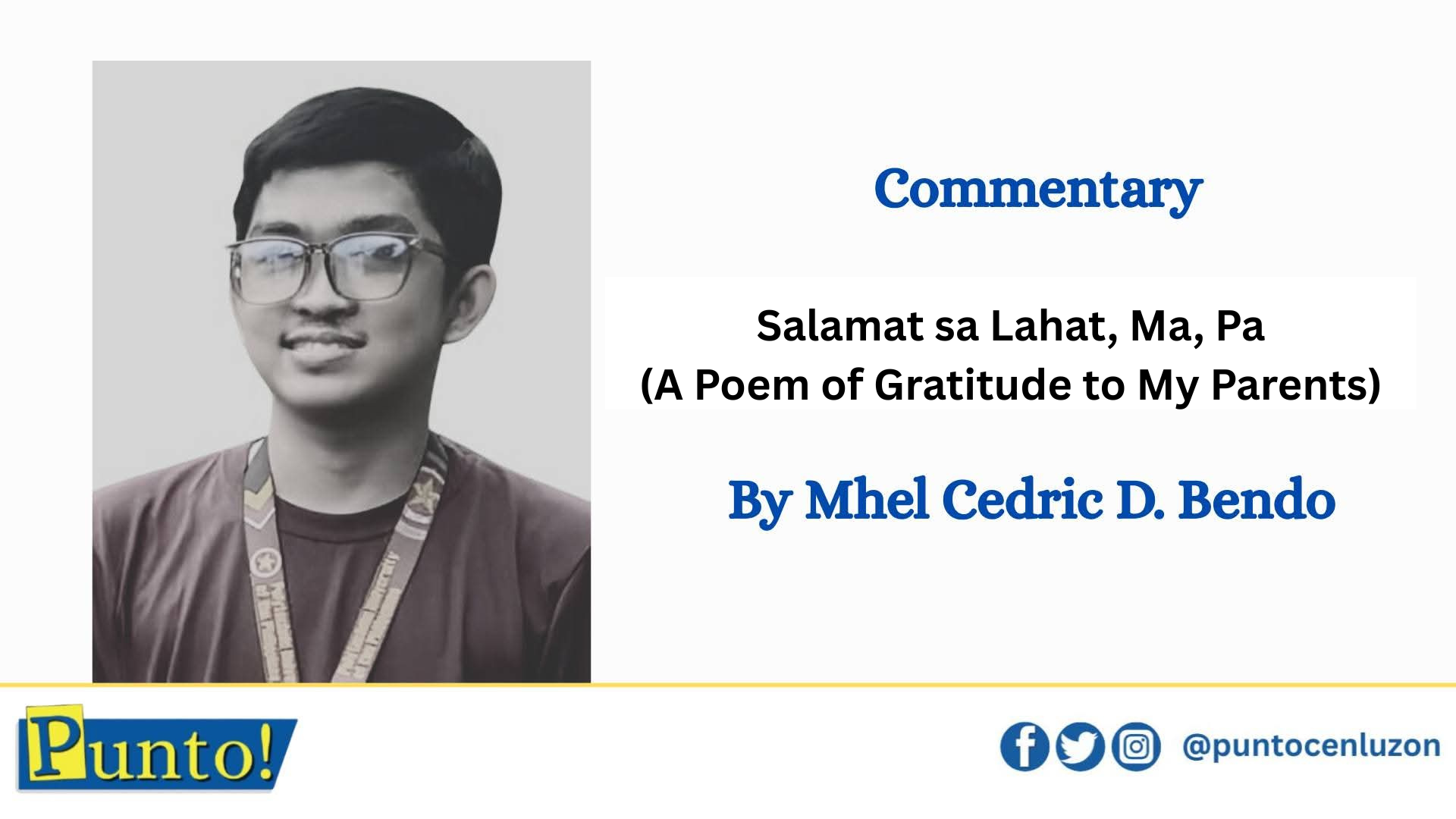
“Salamat sa Lahat, Ma, Pa” was written as a simple but heartfelt expression of gratitude for that kind of love. It reflects lessons taught not through long conversations, but through everyday actions. From my parents, I learned that success is not measured solely by achievements or status, but by compassion, integrity, and the willingness to do what is right even when no one is watching.
In moments of fear, doubt, and uncertainty, my parents’ guidance kept me grounded. Many of their sacrifices remain unseen and unspoken, yet these became the foundation of strength and purpose that I carried into adulthood. Long after childhood passes, their lessons continue to guide and protect me through life’s challenges.
As time moves forward, this poem also becomes a promise. There comes a moment when roles slowly change—when those who once guided us begin to need guidance themselves. Gratitude, then, is no longer just something we say; it becomes something we live. To care, to remain present, and to stand beside those who once stood beside us is perhaps the truest way to give thanks.