
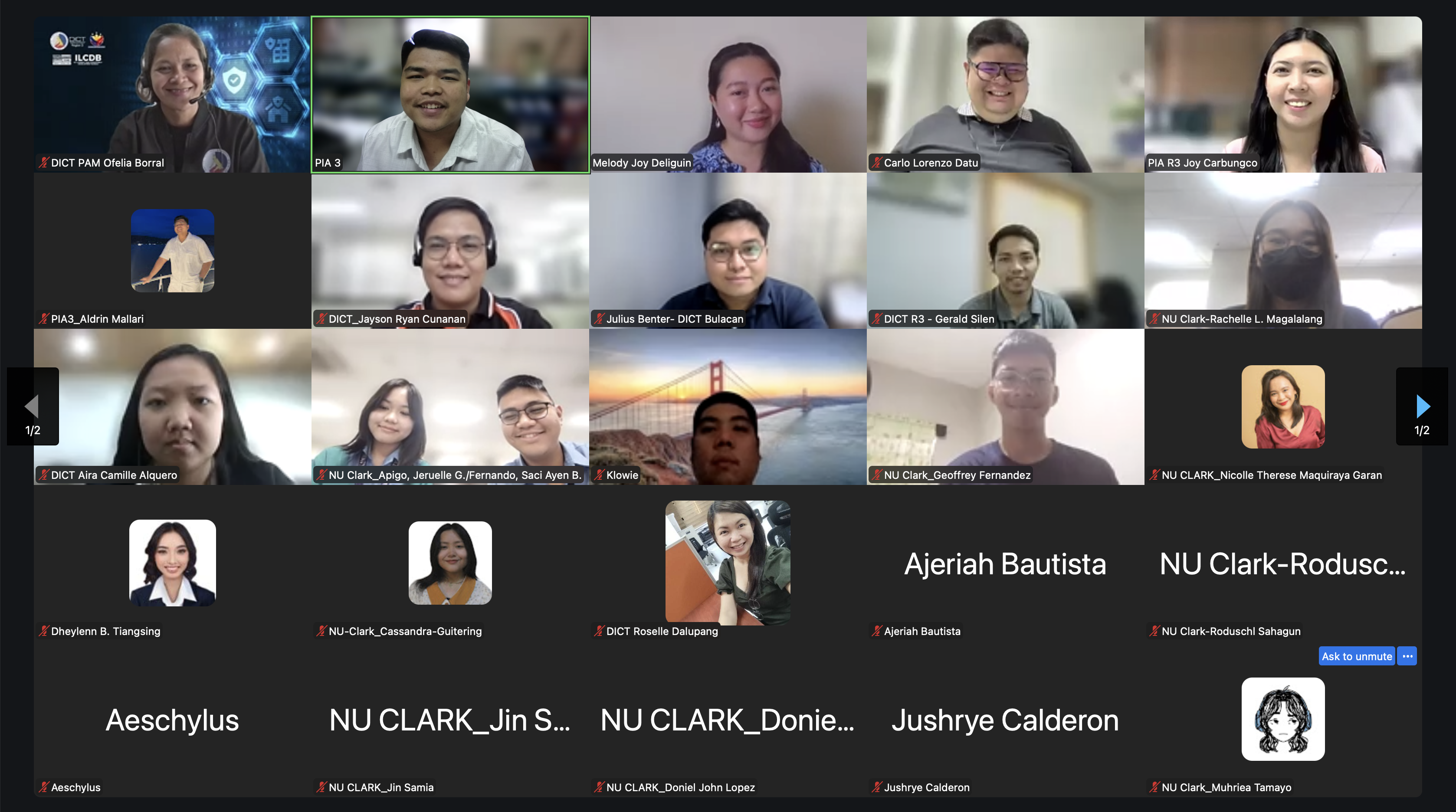
CITY OF SAN FERNANDO, Pampanga (PIA) — The Philippine Information Agency (PIA), in partnership with the Department of Information and Communications Technology (DICT), reinforced media and information literacy and cybersecurity awareness among Kapampangan youth during the Pampanga leg of Kilos Kabataan: Unite for a Digital Safe Future, now in its ninth season.
This activity gathered Communication and Political Science students from National University (NU) Clark, providing a platform for young Filipinos to develop critical thinking, ethical values, and practical digital skills amid the growing threats of misinformation, cyberbullying, and online scams.
Youth values shape the digital future
NU Clark Comm Pillars Adviser Rachelle Lopez-Maglalang opened the forum by highlighting the role of young people in shaping how technology is used, shared, and experienced every day.
She said while digital platforms allow one post, comment, or click to inspire change, they can also expose users to misinformation, harassment, and privacy risks if used irresponsibly.
“The future of the digital world will not be decided by apps and algorithms alone. It will be decided by the values of the young people using them,” Maglalang said, urging students to think critically before sharing content and to speak up when harm is present online.
She challenged the youth to use their creativity and voices to build a digital space anchored on responsibility, respect, and courage; and to choose truth over trends and kindness over clout.
“We challenge you to be more than digital users. Be digital leaders. Lead with integrity, use your voice for good, and help build a safer, smarter, and more inclusive future for Pampanga and the Philippines,” Maglalang said.

Information as power and responsibility
PIA Assistant Regional Head Carlo Lorenzo Datu emphasized that information is a powerful tool that can either build communities or cause harm, depending on how it is used.
“Kapag nagamit mo ang impormasyon nang tama, mapapabuti ang komunidad. Kapag mali, it can cause disruptions and divisions,” Datu said, noting that social media, while empowering, requires responsible use.
He warned against the rise of information pollution—misinformation, disinformation, and mal-information—and introduced the S.P.O.T. method as a simple guide for evaluating online content.
Datu explained that Source involves checking credibility, Purpose looks at intent, Ownership identifies who created the content, and Time determines relevance.
He likewise reminded participants that what they share influences opinions, actions, and public sentiment.
Strengthening cybersecurity habits
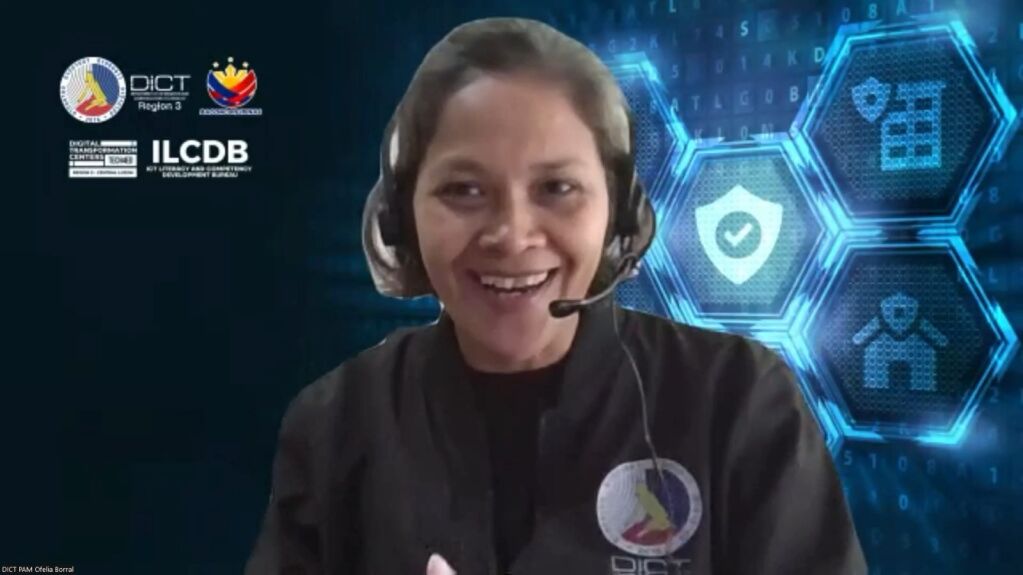
DICT Central Luzon Digital Transformation Center Manager Engineer Ofelia Borral stressed the importance of cybersecurity as digital platforms continue to expose users to online scams, harassment, and data breaches.
“Cybersecurity matters to every Filipino youth because we are all connected at some point,” Borral said, promoting the Click. Think. Protect. framework to encourage safer online behavior.
She noted that one in two Filipino youth has experienced online harassment, with social media platforms remaining highly vulnerable to cyber threats.
To address this, she urged students to enable two-factor authentication, create strong and unique passwords, avoid oversharing personal information, and report fake accounts and suspicious messages.
Borral also advised victims of cyberbullying to avoid engaging with aggressors, document incidents through screenshots, and report cases to trusted adults, school authorities, or the DICT Cybercrime Office.
Youth as digital responsibility champions
Representing the student sector, Political Science student Cassandra Eunice Guitering emphasized that online presence is now a form of social responsibility, as digital platforms are increasingly used for work, academics, and civic participation.
“The networking apps we use are now also for work, academics, and overall upkeep with the world we live in. In acknowledging this, we can assert that our online presence is a social responsibility. How we behave and how that is acted upon have consequences on not only how we perceive, but also on social cohesion or division. This is why media and information literacy as a dialogue is greatly and gravely relevant, especially to the impressionable youth,” she stressed.
Guitering added while social media encourages self-expression and connectivity, it also poses risks when accountability is lacking, leading to impersonation, harassment, and abuse of information.
She urged fellow students to practice critical evaluation using tools such as S.P.O.T. and to strengthen their digital safety by managing what they share online. She also encouraged youth to extend cybersecurity awareness to others, especially those with limited access to digital literacy education.
Organizers said Kilos Kabataan: Unite for a Digital Safe Future continues to serve as a key platform for nurturing digitally responsible youth leaders who can help create a safer, more informed, and inclusive online environment in Pampanga and beyond. (CLJD/MJSC, PIA Region 3-Pampanga)