

Over 11,000 Chain Restaurant Locations Across the Country Are Committed To Phase Out Caged Eggs
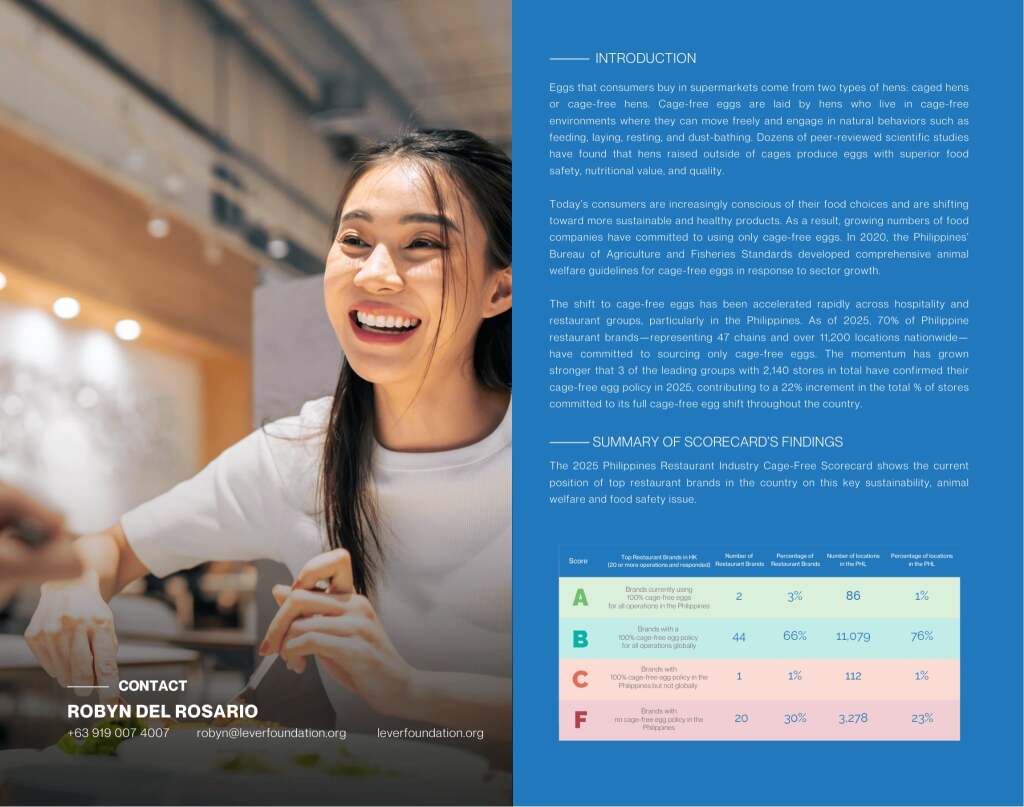
Manila — The Philippines has emerged as Asia’s leader in sustainable food sourcing, with seven out of 10 major restaurant brands and nearly 80% of chain restaurant locations in the country now committed to eliminating the use of caged eggs, according to the 2025 Philippines Restaurant Industry Cage-Free Egg Scorecard, released by Lever Foundation.
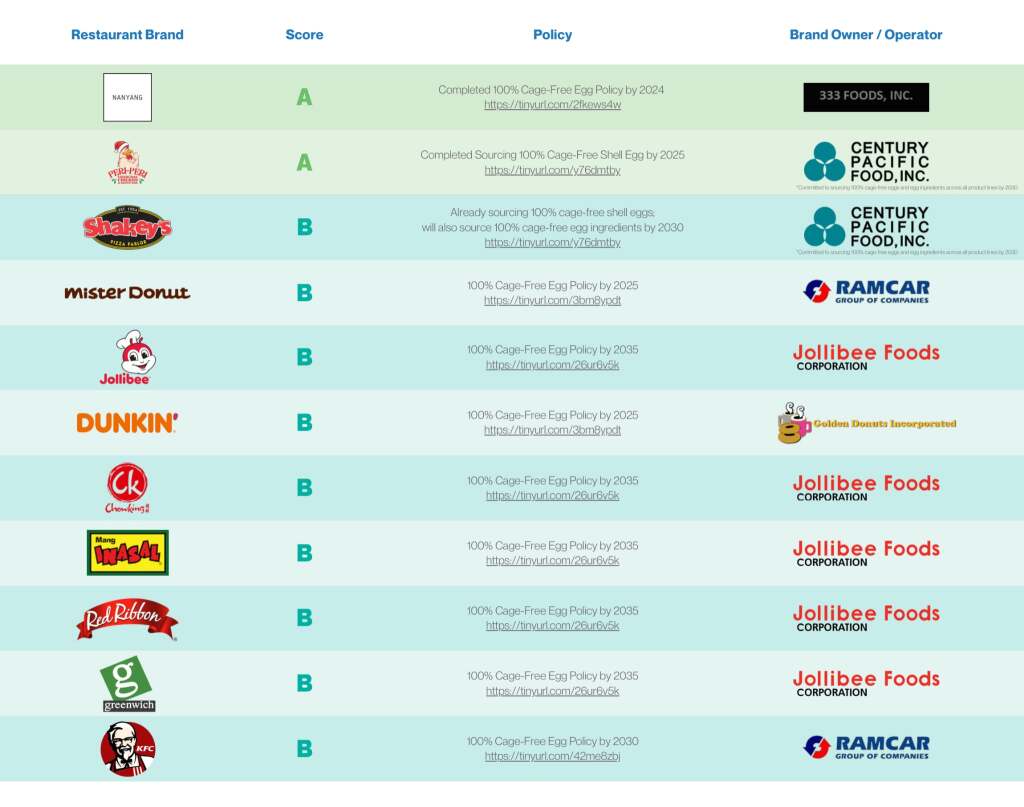
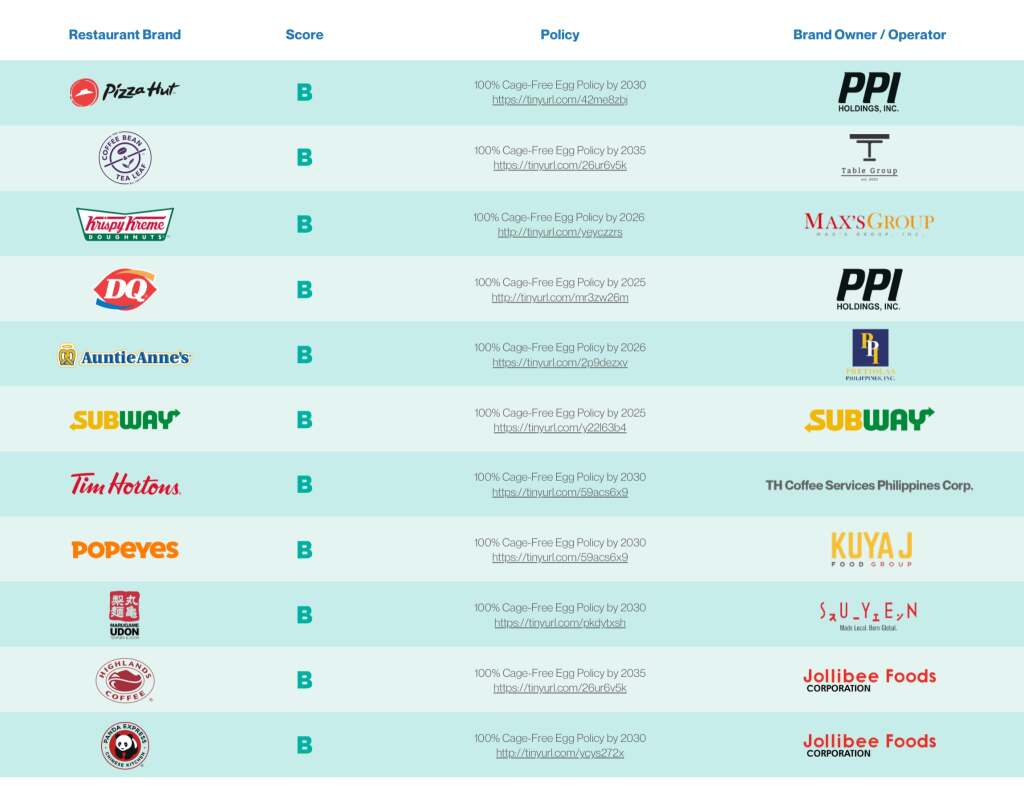
Of 67 leading restaurant brands evaluated—representing the vast majority of the Philippines’ dining landscape—47 chains operating 11,277 locations have pledged to fully transition to cage-free eggs. This represents 78% of all chain restaurant locations nationwide—the highest concentration in Asia. This total includes brands that have already completed their transition, such as Nanyang and Peri-Peri, along with many of the industry’s biggest names, which have set timelines to implement 100% cage-free sourcing in the years ahead. Filipino favorites, including Jollibee, Max’s, Chowking, Mang Inasal, Red Ribbon, Greenwich, and Shakey’s have made pledges, alongside international giants such as KFC, Dunkin’, Pizza Hut, Subway, and Burger King.
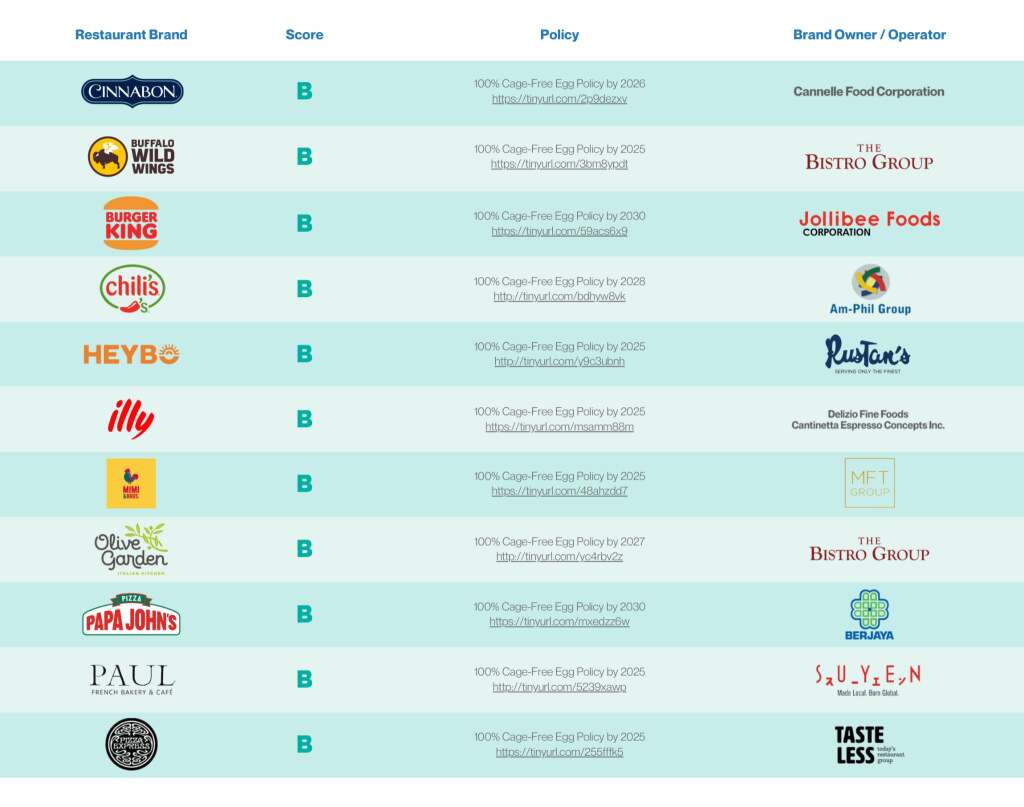
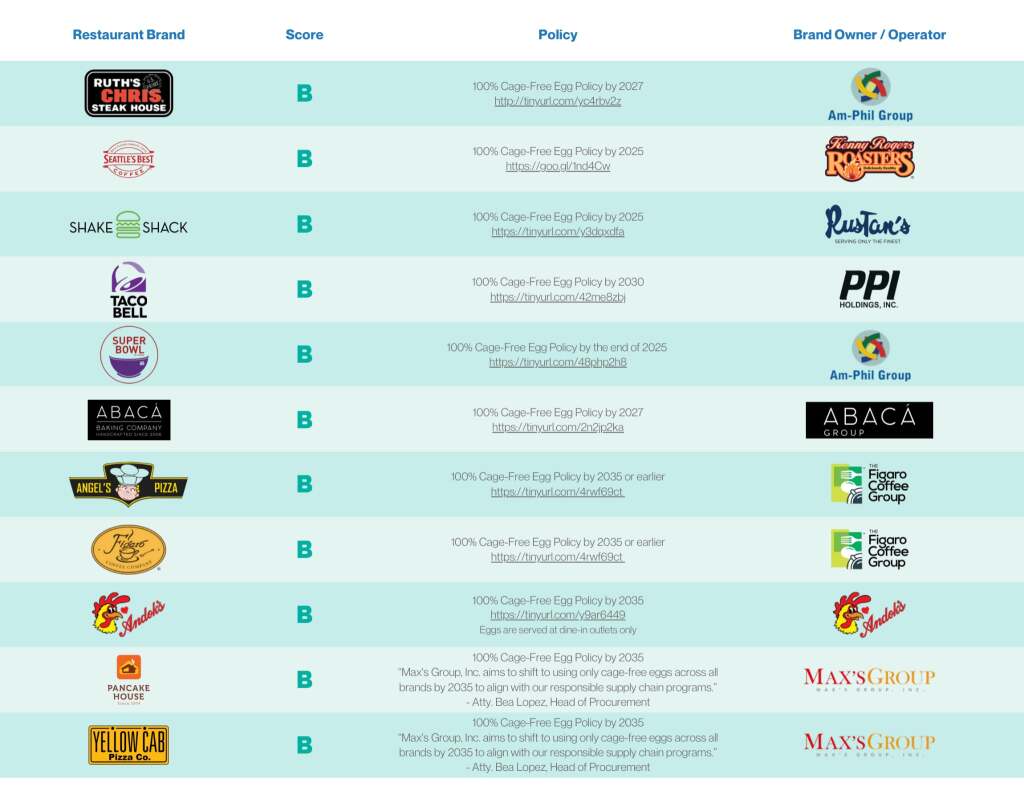
“The Philippines restaurant industry has demonstrated remarkable leadership in adopting cage-free egg policies,” said Robyn Del Rosario, Sustainability Program Lead at Lever Foundation, an international NGO that collaborated with all of the domestic restaurant groups and a number of the international groups in developing their policies. “With 70% of major restaurant brands—representing 78% of chain restaurant locations across the country—already committed to cage-free egg sourcing, we’re witnessing the sector’s recognition that animal welfare, food safety, and sustainability are essential business priorities.”
The shift to cage-free eggs addresses both animal welfare and food quality. Cage-free systems allow hens to move freely and engage in natural behaviors such as nesting, perching, dust-bathing, and short flights in indoor barn environments—behaviors completely restricted in conventional battery cage systems where hens spend their entire lives in spaces smaller than a sheet of paper.
Dozens of peer-reviewed scientific studies have documented that hens raised outside cages produce eggs with improved food safety profiles, higher nutritional value, and better quality metrics. The Philippine government recognized this shift in 2020 when the Bureau of Agriculture and Fisheries Standards developed comprehensive animal welfare guidelines for cage-free eggs. Meanwhile, an increasing number of consumers are opting for plant-based alternatives, choosing to leave eggs off their plates entirely as the best way to support hen welfare.
The momentum in the country’s restaurant sector accelerated significantly over the past year, with three major restaurant groups setting cage-free egg policies for a combined 2,140 locations. These groups are 333 Foods (operating BreadTalk, Nanyang, and Banana Leaf), Max’s Group (operating Pancake House and Yellow Cab), and Century Pacific Food, Inc. (operating Shakey’s, Potato Corner, and Peri-Peri).
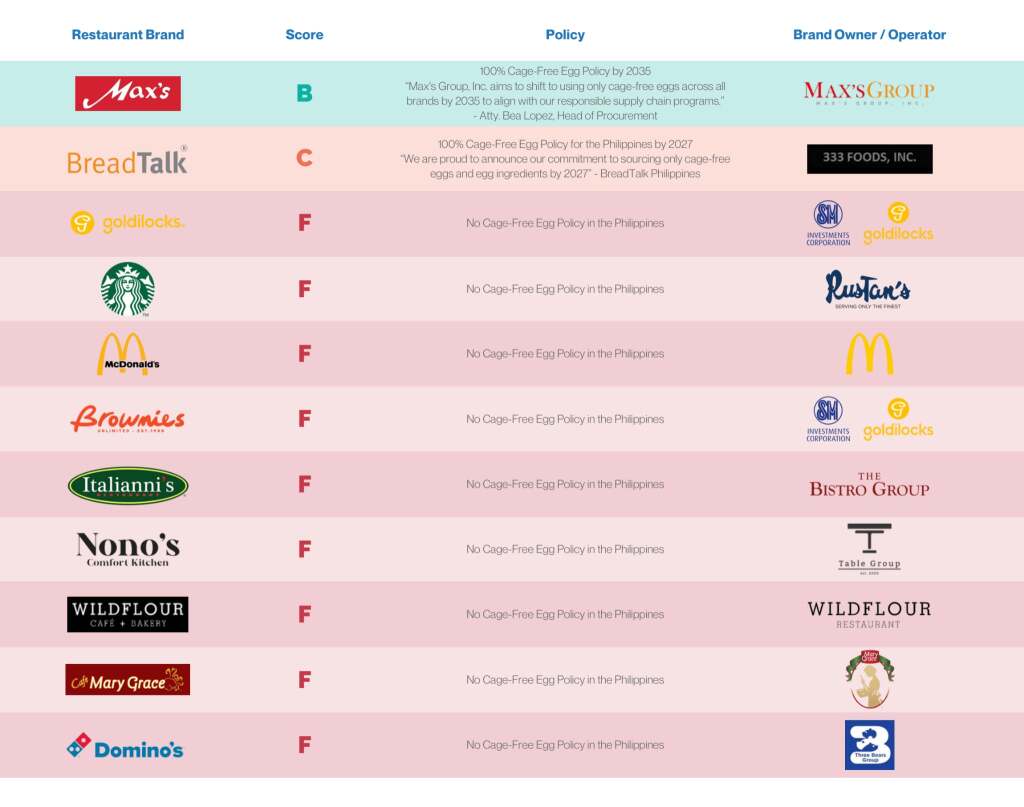
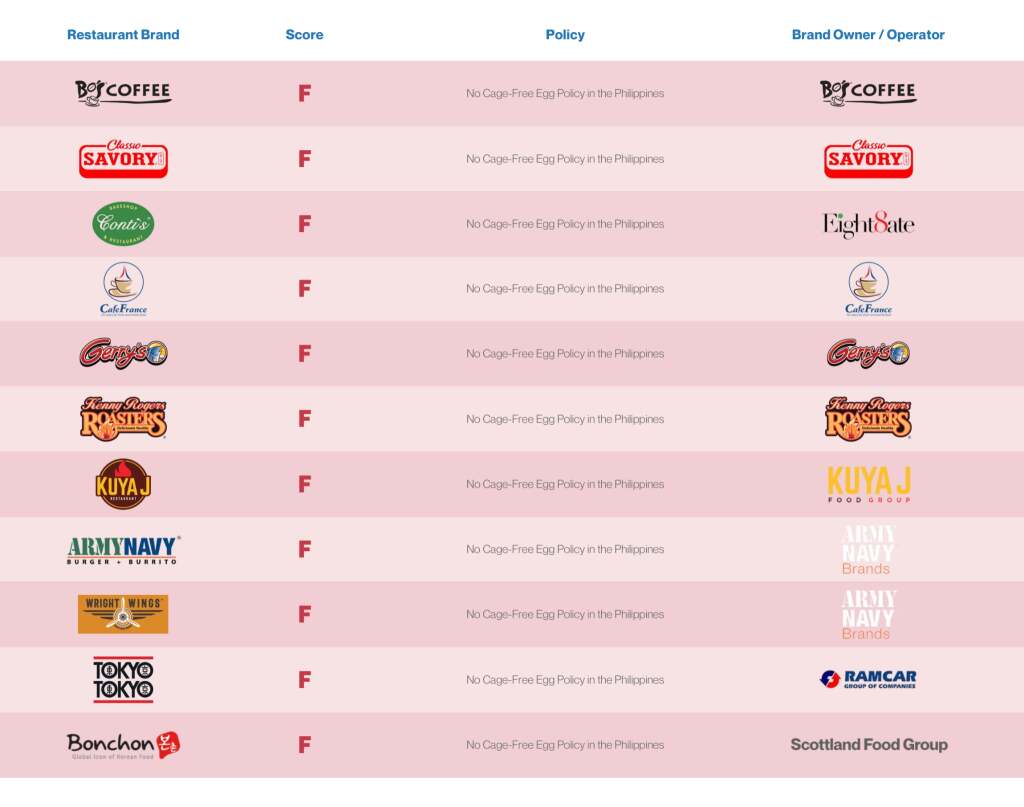
Only 20 of the leading chain restaurant brands in the country still serve caged eggs to their customers, with no timeline for shifting to cage-free. These include Goldilocks (which publicly pledged to set a cage-free egg policy by the end of 2025, but failed to do so), Army Navy, Wildflour, Nono’s, Italianni’s, McDonalds, and Starbucks.
The 2025 Philippines Restaurant Industry Cage-Free Egg Scorecard evaluates companies on a four-tier scale: A (100% cage-free egg implementation achieved in the Philippines), B (global cage-free egg commitment and timeline), C (Philippines-specific cage-free egg commitment and timeline), and F (no cage-free egg policy in the Philippines).
“The transformation we’re seeing is remarkable, and we’re eager to collaborate with the remaining companies and share the learnings from industry leaders who’ve already made successful commitments,” said del Rosario. “The path forward is clear, and we’re confident more brands will catch up with this industry-wide shift in the year ahead. Cage-free sourcing is not just a more ethical choice—it’s becoming the baseline expectation from consumers and the competitive standard in the Philippines.”