
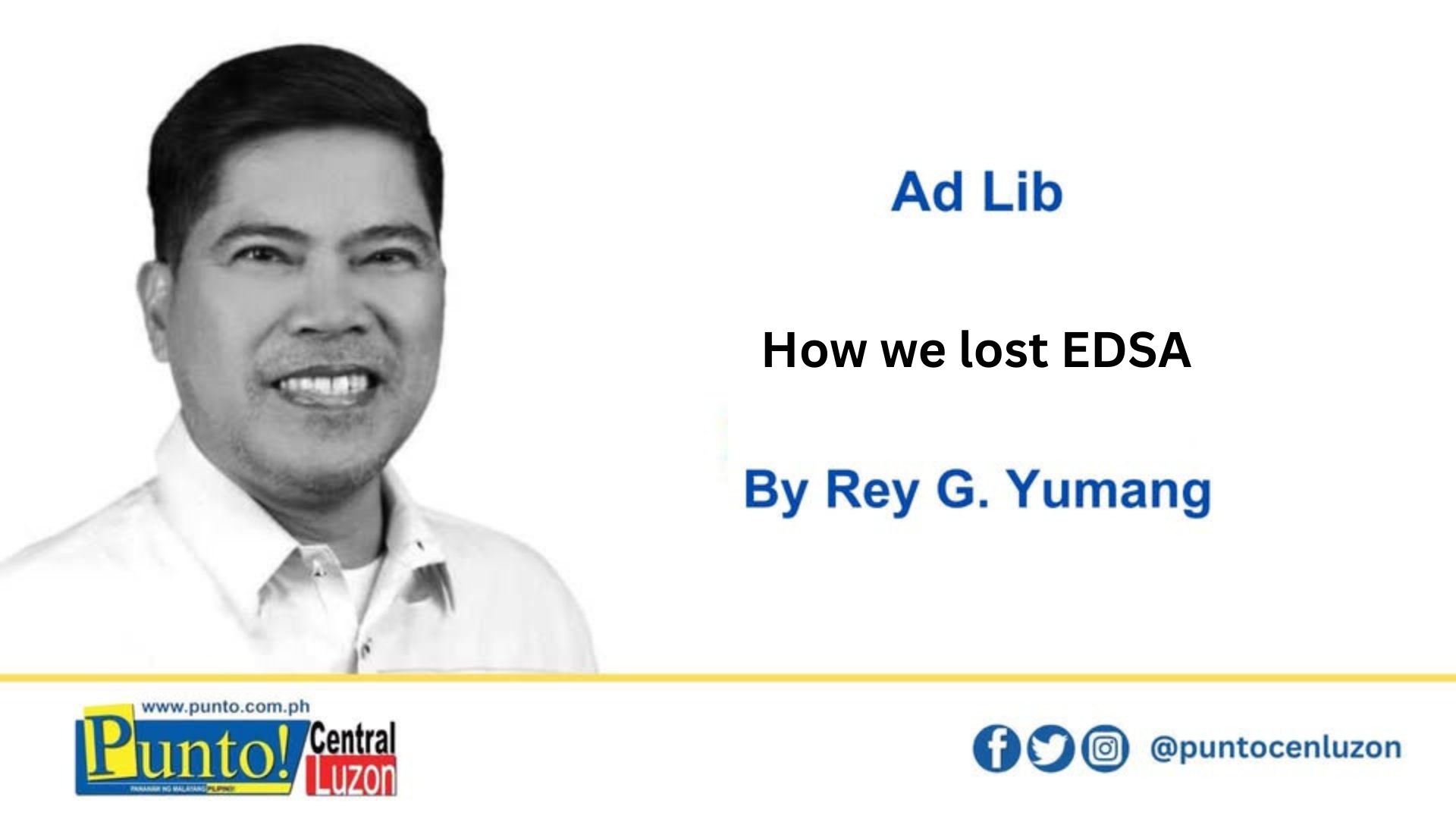
WHEN ARCHBISHOP Socrates Villegas of Lingayen-Dagupan lamented in his Feb. 25, 2026 homily that the “grace” of EDSA has been squandered, the words cut deep precisely because they were uncomfortably true. Four decades after the 1986 People Power Revolution, we continue to commemorate EDSA with wreaths and speeches but we never reflect on the harder question: what exactly did we do with the freedom we were handed?
I had always believed that EDSA was a turning point and considered it as our nation’s collective decision to choose decency over fear, institutions over strongmen, truth over lies. For a while, it felt real. The early months of the restored democracy under Corazon Aquino carried a fragile hope. A new Constitution was ratified in February 1987, promising safeguards against tyranny: term limits, independent commissions, a freer press. We told ourselves the nightmare was over.
And then we slowly allowed old habits to return.
We tolerated patronage as “how things work.” We excused corruption as a necessary evil. We learned to live with broken systems because fixing them demanded time, courage, and inconvenience. We cheered for charisma and dismissed competence as boring. We scrolled past abuses and called it self-care. We sold our votes, our silence, our attention; sometimes for convenience, sometimes for small favors, sometimes for nothing at all.
Christian Monsod, a key framer of the 1987 Philippine Constitution, stated that a major shortcoming in crafting the charter was “overestimating the spirit of EDSA” while underestimating the “greed for power of politicians and the greed for wealth of the rich”.
It is a painful confession because it also indicts us. We assumed the moral energy of 1986 would sustain itself. It didn’t. Morality is not inherited; it is practiced. Democracy is not self-cleaning; it requires us to scrub away lies, even when the dirt is on our own hands.
So did EDSA betray Filipinos, or did we betray EDSA?
EDSA was never meant to be a magic moment that would forever protect us from abuse. It was a beginning, not an ending. The betrayal came later when we tolerated dynasties that turned public office into family property, when we laughed at disinformation until it rewrote our history, when we traded outrage willingly for comfort. We did not lose EDSA in one dramatic collapse; we misplaced it in daily, ordinary choices.
Yes, we gained freedoms that once cost lives: the freedom to speak, to assemble, to dissent. But freedom without responsibility becomes noise. Democracy without memory becomes theater. When we mock activists as nuisances, dismiss facts as “opinions,” or vote based on loyalty rather than record, we participate quietly but decisively in the erosion of what EDSA tried to build.
When Archbishop Villegas says, “this is not EDSA,” he is not only rebuking leaders. He is knocking on our conscience. Because EDSA fails every time we look away from a small injustice, every time we reward dishonesty with applause, every time we excuse cruelty because it does not hurt us personally.
EDSA did not betray us. We betrayed EDSA when we treated it as a holiday on the calendar instead of a discipline in daily life. If there is grace left to recover, it will not come from anniversaries or hashtags. It will come when each of us admits, without excuses, that we are part of what went wrong; and then decides, finally, to be part of what makes things right.