

SCIENCE CITY OF MUÑOZ (PIA) — The Philippine Rice Research Institute (PhilRice) advised rice farmers to implement synchronized planting and proper field management practices to prevent severe damage from rice black bug (RBB) infestation.
PhilRice Crop Protection Division Senior Science Research Specialist Leonardo Marquez said RBB is a major insect pest that can cause significant yield losses if not managed early.
He explained that planting schedules play a critical role in pest buildup, as fields with standing crops tend to attract and concentrate pest populations.
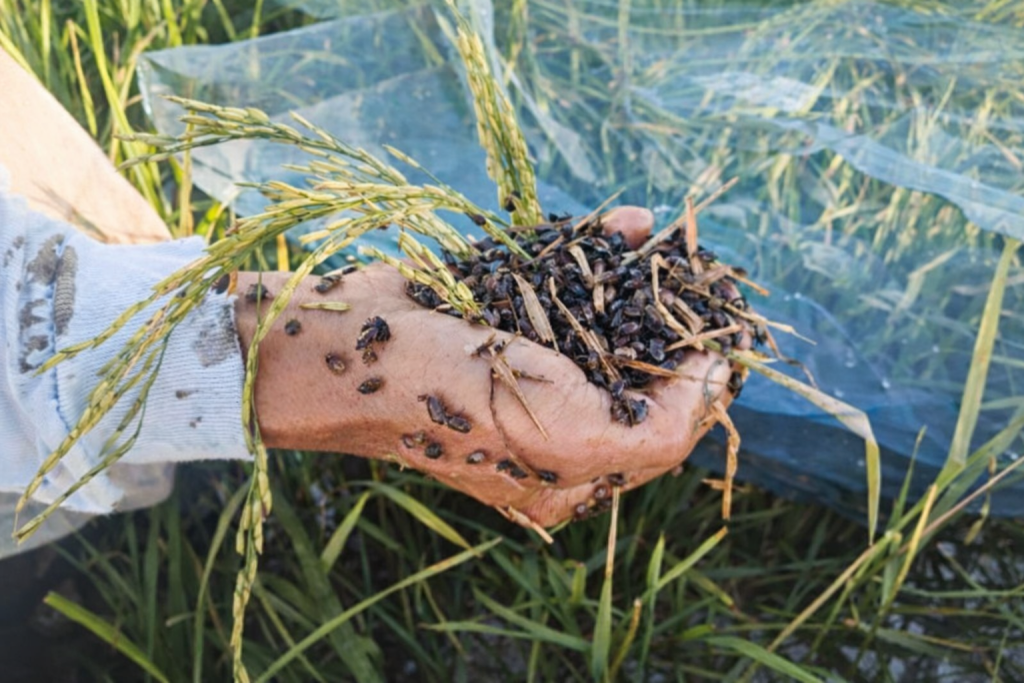
“If we expect to harvest 100 sacks, we may lose 15 to 23 under normal infestation, but in severe cases, losses can reach 60 to 100 percent, especially when farmers do not follow synchronized planting,” he said.
Marquez noted that farmers who plant immediately after harvest may allow RBB populations from the previous season to transfer to newly established crops.
Conversely, those who plant one to two months late may experience heavier damage because their fields become the only remaining standing crops where pests converge.
To address this, he recommended community-wide synchronized planting to disrupt the pest’s life cycle and prevent population transfer.
He also advised immediate plowing after harvest or dry land preparation to eliminate hiding and survival sites while waiting for the next cropping season.
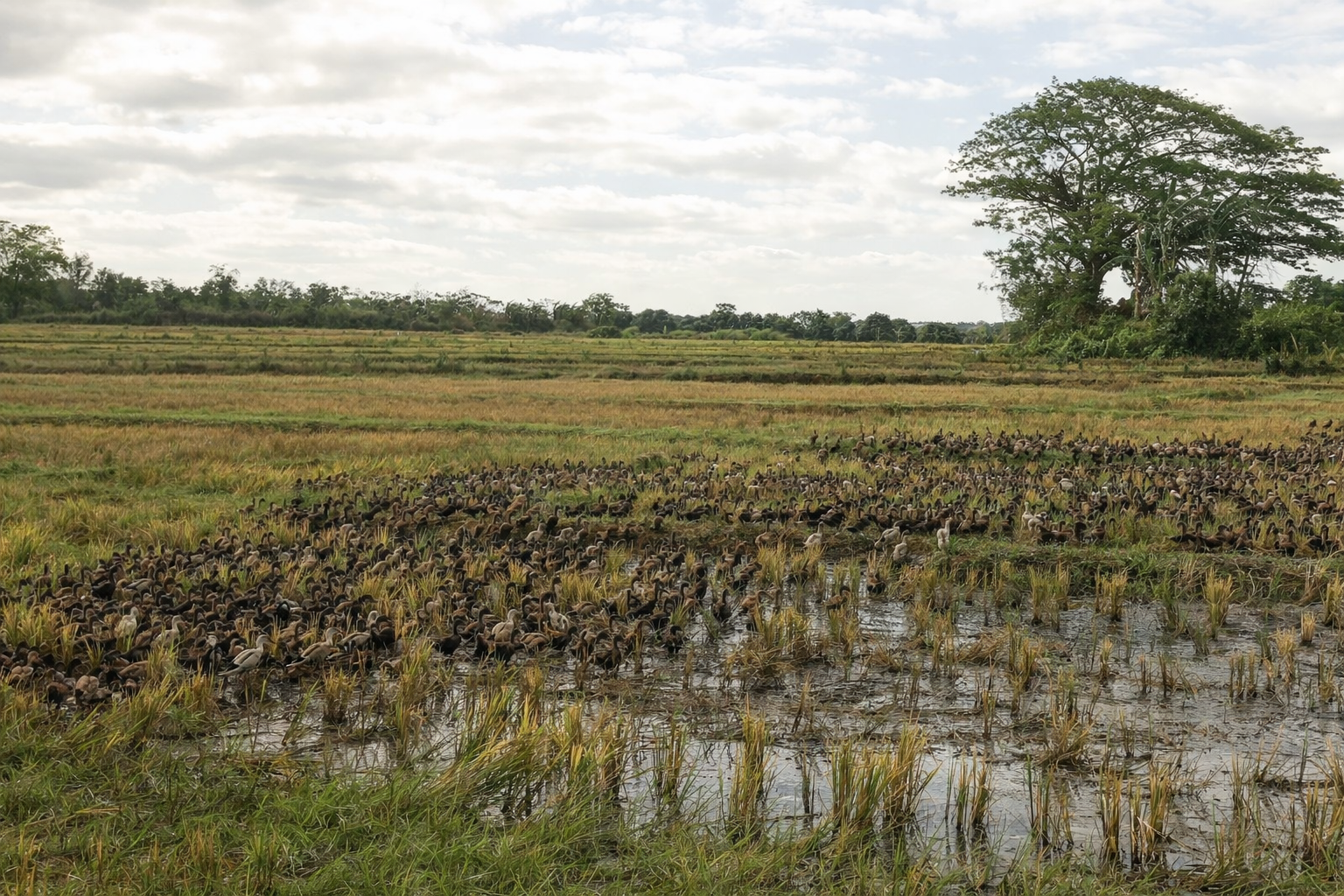
Allowing ducks to graze in previously infested fields, maintaining at least five centimeters of water to submerge eggs, and lowering the seeding rate to about 40 kilograms per hectare can further help reduce pest multiplication.
Marquez added that biological control agents such as Metarhizium may be applied when infestation reaches an average of five bugs per hill, stressing that early intervention is necessary due to its slow-acting effect.
He emphasized that maintaining strict field sanitation is essential, as rice black bugs hide in weeds and rice-related vegetation after harvest and remain until the next planting season.
PhilRice continues to promote integrated pest management practices to help farmers protect rice yields, reduce production losses, and strengthen food security efforts. (CLJD/MCAL, PIA Region 3-Nueva Ecija)