

As the Philippines continues to battle biodiversity loss, Google has announced a major step forward in using AI to preserve endangered species. Through a partnership with the Vertebrate Genomes Project (VGP), Google is providing advanced AI tools and funding to sequence the genetic codes of threatened animals, a move that holds significant promise for conservation efforts in biodiversity hotspots like the Philippines.
Scientists predict that up to one million species globally face extinction. To combat this, Google is deploying AI technologies—including DeepPolisher, DeepVariant, and DeepConsensus—to make genomic sequencing faster, more accurate, and more affordable. This process allows researchers to create a “biological instruction manual” for species, vital for designing effective conservation strategies.
Regional Impact for Southeast Asia. The initiative has already successfully sequenced 13 endangered species, several of which are native to the broader Southeast Asian region, highlighting the technology’s relevance to local ecosystems:
- The Elongated Tortoise: A critically endangered reptile native to Southeast Asia, currently the focus of captive breeding and reintroduction efforts.
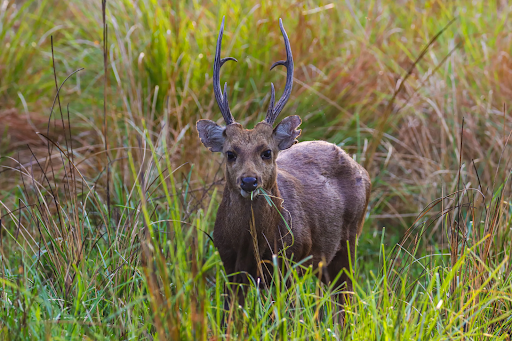
- The Hog Deer: Once plentiful across South and Southeast Asia, this species now faces serious decline and loss of genetic diversity.
- Eld’s Deer: An endangered deer species indigenous to the region that requires breeding and conservation plan to survive.
Expanding the Safety Net. In addition to the initial species, Google.org has awarded the AI for Science fund to The Rockefeller University to expand this work to 150 additional species. This expansion opens the door for more unique wildlife—potentially including species found in the Philippines—to benefit from genomic preservation.
“Understanding a species’ genome could be the key to their conservation,” wrote Lizzie Dorfman, Group Product Manager; and Andrew Carroll, Product Lead for Genomics at Google. “By sequencing these animals’ genomes — their complete set of genetic instructions (DNA) — scientists are able to support efforts to preserve the genetic diversity of these animals and prevent further loss of their species.”
The genomic data generated by this project is being made freely available to the scientific community. For a country like the Philippines, which is home to unique but threatened species like the Visayan Spotted Deer (Pilandok), open access to these advanced tools and data sets represents a crucial resource for local conservationists and researchers.
About the Technology. Sequencing the first human genome took 13 years and $3 billion. Today, thanks to AI tools developed by Google researchers, sequencing can be done in days for a fraction of the cost. These tools help correct errors in genetic data, ensuring that the “biological picture” of each animal is as accurate as possible.
For more information on Google’s AI conservation initiatives, visit the The Keyword blog.